
Basketball Betting in New Zealand: Where the Court Meets the Bookmaker
 Available in US
Basketball was invented by James Naismith in 1891 in a Springfield, Massachusetts gymnasium, hung a peach basket on a balcony rail and told his class of fourteen the rough rules of a game meant to fill the gap between football and baseball seasons. A century and a third later the sport spans everything from the NBA’s four twelve-minute quarters to FIBA’s four ten-minute quarters, and to 3×3 half-court, which became an Olympic event in 2020. New Zealand has never hosted an NBA franchise, but the league’s games run through kiwi mornings on weekdays and on weekend evenings, and the wagering on those games — and on the NBL across the Tasman, on EuroLeague nights and on the FIBA windows — now passes through a single legal channel.

That channel is unusually narrow. Since 28 June 2025 no one other than TAB New Zealand may offer racing or sports betting to a person in New Zealand. The rule sits at section 74AAA of the Racing Industry Act 2020, inserted by the Racing Industry Amendment Act 2025. The Department of Internal Affairs told providers serving the country to withdraw with immediate effect. The result is a betting market with one operator that runs two online brands — TAB and Betcha — rather than the dozen-odd brands a UK or an Australian punter scrolls past. The whole question of which basketball bookmaker to use in New Zealand collapses, in law, into which of TAB NZ’s two apps. Offshore brands still run their websites to New Zealand IPs; the law targets the operator, not the player, and DIA names no penalty for a person who places a bet through one of them. What DIA does say is that those operators sit in jurisdictions with minimal consumer safeguards, may not return unspent credits and may not pay large wins — the kind of warning that reads like boilerplate until it is the bet that was never paid.
This page walks through what that legal frame means in practice, which basketball markets TAB NZ lists, how a margin shapes every price a bettor sees, and what a free-bet offer actually costs in turnover once the small print is read. The two licensed brands come first, then the offshore brands a New Zealand reader is most likely to meet, rated on the same criteria without the suggestion that any of them is a lawful alternative.
Currency stamp: Current as of 30 October 2026 · checked against the Racing Industry Act 2020 (as amended 28 June 2025) and the Department of Internal Affairs’ statement on the betting monopoly.
- Basketball in New Zealand: What the Sport Looks Like Before a Price Is Ever Quoted
- The Law: One Operator, Two Brands, No Licence Register
- Punter Safety: What the Monopoly Does and Does Not Give the Player
- The Mobile Court: TAB NZ and Betcha in the App
- Live Betting, Cash Out, and the Mismatch Between Marketing and Mechanics
- Picks, Tips, and the Strategy That Beats the Margin
- Bet Types and Odds: How a Basketball Price Is Built
- Tournaments, Codes, and Where the Basketball Calendar Shows Up
- The Numbers Behind the Prices: How a Margin Is Built
- Top 10 New Zealand Basketball Bookmakers: A Consequence-Framed Ranking
- The Whole Court in One Read
- FAQ
Basketball in New Zealand: What the Sport Looks Like Before a Price Is Ever Quoted
A basketball match starts when the ball leaves the referee’s hand at centre court. What matters for a bettor is the structure underneath that tap: ten players on court at any moment, unlimited substitutions, and a scoring system that produces the runs of points bookmakers price into live markets. A field goal is worth 2 points, 3 from beyond the arc, and a free throw 1. The rim sits 10 feet (3.05 m) up at almost every level of competition. Those rules govern NBA, FIBA and the NBL across the Tasman identically, which is why a single odds model travels between them — but the quarter lengths do not: NBA games run four twelve-minute quarters, FIBA games four ten-minute quarters, and overtime is five minutes at both. 3×3, played on a half-court with a twelve-second shot clock, runs to a fixed ten minutes or to twenty-one points, whichever comes first.
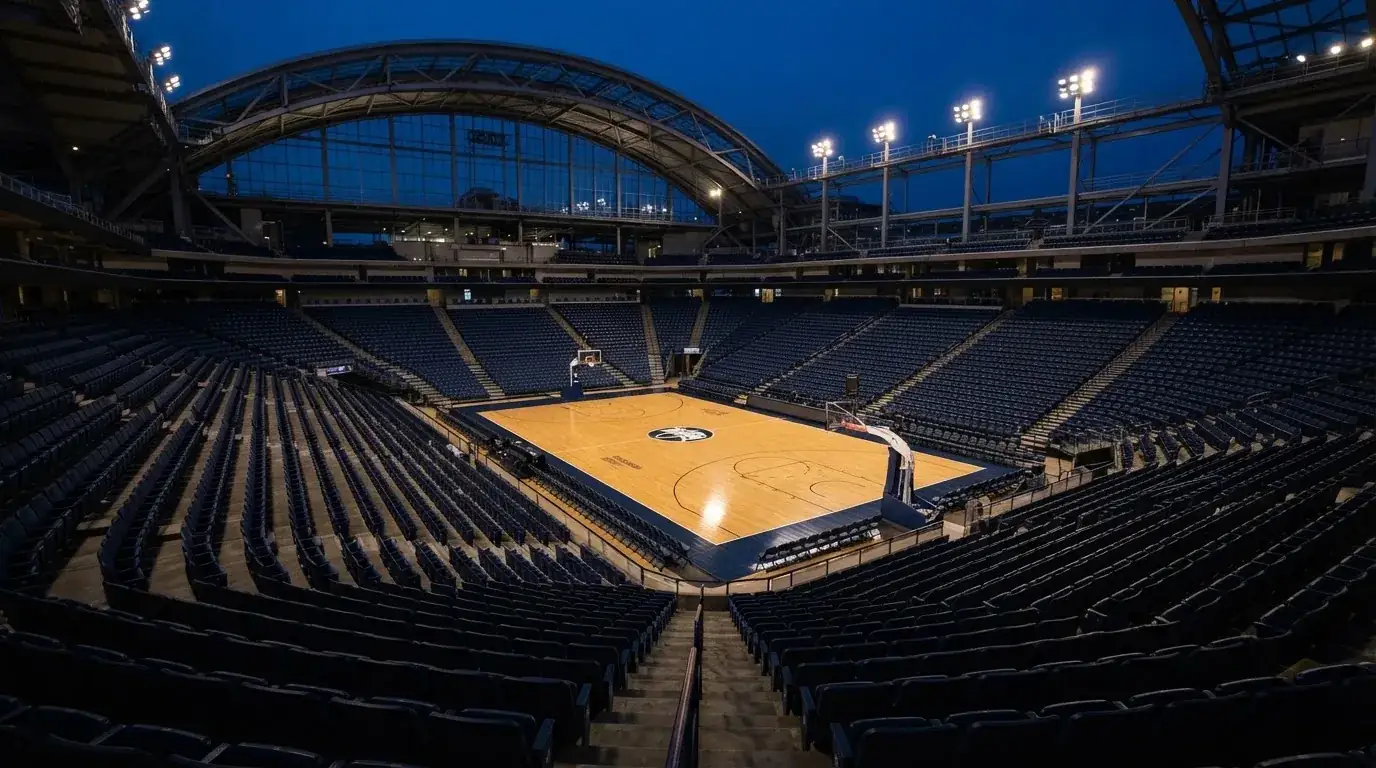
The NBA’s calendar drives most of the basketball a New Zealand punter will price. Regular season starts in late October and ends in mid-April, followed by the play-in tournament and the playoffs through June. The NBL — the Australian league, with the New Zealand Breakers as the only kiwi side — runs from October to March. EuroLeague runs October to May in parallel with the NBA and is the strongest nightly alternative on weekdays. FIBA windows sprinkle national-team games through the year and become dense in the lead-up to a World Cup or an Olympic qualifying tournament. The bettor who follows one of these calendars already knows which nights the bookmaker will have a full card; the bettor who does not will see prices on a dozen games on any winter weekday morning and a handful on a summer afternoon.
The Law: One Operator, Two Brands, No Licence Register
New Zealand’s betting law is a study in restraint. The Gambling Act 2003 covers gambling broadly; the Racing Industry Act 2020 sets up TAB NZ as the racing and sports betting operator; the Racing Industry Amendment Act 2025 added section 74AAA, which states that no person other than TAB NZ may offer racing betting, sports betting or other racing or sports betting to a person in New Zealand, regardless of where that person is resident or incorporated. The change took effect on 28 June 2025. There is no application process because there is no licence; the DIA’s register of online gambling does not list bookmakers because there is only one lawful bookmaker. The Online Casino Gambling Act 2026, which came into force in the same legislative cycle, concerns casino gambling and does not extend the betting monopoly — TAB NZ’s casino licence (which it applied for and won the right to apply for) covers casino only.

TAB NZ runs the business through Entain under a 25-year agreement signed in 2023. Entain has a 50/50 share of gross profits, with at least $150 million a year going to TAB NZ for the first five years, and a one-off $100 million payment was pledged to the racing sector on signature. The two online brands run on the same platform: TAB at tab.co.nz and Betcha at betcha.co.nz, the latter with a younger product surface and a separate app, Entain New Zealand Limited’s first release on the New Zealand App Store on 6 August 2024. They are not rivals. The same exclusion set in one excludes the player from the other; the same Know Your Customer check opens both.
The legal frame carries three consequences a New Zealand bettor actually feels. First, the player who chooses TAB NZ or Betcha has access to a complaints framework — the operator’s own dispute process, the DIA, and The Gambling Commission’s complaint mechanisms for matters that fall under its remit. Second, the harm-minimisation tools under TAB NZ’s control (deposit limits, time-outs, self-exclusion) actually reach the bettor because the operator is in the regulator’s jurisdiction; the offshore brand in Curaçao answers to none of that and does not have to honour a Kiwi player’s time-out. Third, the player is protected by the New Zealand consumer-protection framework — the Fair Trading Act, the Commerce Commission’s enforcement muscle against misleading claims, and Inland Revenue’s long-standing position that recreational winnings are generally not taxable.
A fourth point sits beside the third and is rarely made explicit. Offshore brands serving New Zealand are breaking New Zealand law; the bettor placing a bet with them is not, on the published reading of section 19(4) of the Gambling Act 2003 (inserted in 2025). DIA names no penalty for an individual bettor. What DIA does say is that an overseas operator “may be in a jurisdiction with minimal consumer safeguards, may not return unspent credits, and may not pay out large wins” — a sentence worth reading twice before a first deposit.
Punter Safety: What the Monopoly Does and Does Not Give the Player
The monopoly is unloved by people who like choice and approved by people who want harm minimisation to bite. Both reactions are real and both have a price.
The age threshold for sports betting with TAB NZ is 18; the 17+ rating on the app store listing is set conservatively against that, and the actual sign-up requires a New Zealand address and verified identity. Under-18 betting is an offence under section 89 of the Racing Industry Act 2020. Land-based casino gambling in New Zealand is set at 20 — the two age limits are not a typo and they are not the same thing, and a punter who turns 18 in the morning does not walk into a casino in the afternoon.
TAB NZ’s apps carry deposit limits, time-outs and self-exclusion. The helpline is the Gambling Helpline on 0800 654 655, with a text line on 8006, and the support body behind those numbers is Safer Gambling Aotearoa. The Problem Gambling Levy, paid by TAB NZ, is set at 0.74% of gross profits for the period from 1 July 2025 to 30 June 2028 — small compared with the equivalent UK levies, but the difference is that the levy is collected from one operator rather than a market of dozens.
The honest framing is that the monopoly carries both ways. TAB NZ is subject to the DIA’s monitoring under the Gambling Act 2003 and must keep the risks of problem and underage gambling minimised in its terms of trade. The offshore brand that takes a bet from a New Zealand IP is not. The player who hits a large win at TAB NZ has an operator it can be enforced against. The player who hits a large win at an offshore bookmaker has a contract with a company registered in Curaçao or Anjouan, before an arbitration panel that does not need to know what section 74AAA says. Neither is risk-free; one is recognised by a regulator the player can write to.
The Mobile Court: TAB NZ and Betcha in the App
Basketball is a sport for a phone. Most NZ punts on the NBA come In the workday or in the late evening, and the speed of a live NBA game — a 24-second shot clock, possessions that last less than a minute, scoring in twos and threes — rewards being able to bet from a handset rather than from a desktop. The two TAB NZ apps handle that posture as their default, not as a fallback.
The TAB app, “TAB – Racing & Sports Betting”, is published on the New Zealand App Store by the New Zealand Racing Board and was first released on 8 September 2014. It carries horse, harness and greyhound racing alongside rugby union, rugby league and the rest of the New Zealand sports calendar. The app carries a 17+ rating — set against the 18+ age law for betting — and on the App Store is one of two apps a basketball-only punter is likely to need. Trackside live race streaming, racing form tools, Blackbook and a Jockey Challenge are oriented to the racing side; basketball sits in the same wallet, with pre-match and live markets and a simplified wallet for deposits and withdrawals. The interface is dense on racing, lighter on team sports, and shows its age on the latter.
Betcha is the second of the two lawful brands and was released on 6 August 2024 by Entain New Zealand Limited. Its basketball coverage is the more obvious fit for a punter whose interests are NBA, NBL and EuroLeague rather than horses. The app’s listed sports run from horse, greyhound and harness racing through rugby, NRL, MMA/UFC, NBA, NFL, tennis, cricket, football, motorsports and esports; the basketball markets sit inside the wider sportsbook with the same Multi, Same Game Multi and live pricing structures TAB NZ runs across both brands. A practical difference: Betcha’s product surface is newer, the design is touch-first, and a punter who lives mostly in team sports is likely to find the basketball browsing easier there.
The punter with two phones runs both apps. The punter with one picks TAB if racing matters at all — the racing form, the live streaming and the racing-only markets are unmatched in New Zealand — and picks Betcha if racing does not and the interface does. They share an account-wallet through TAB NZ, but a single exclusion applies to both; a punter who has self-excluded at TAB is self-excluded at Betcha.
Live Betting, Cash Out, and the Mismatch Between Marketing and Mechanics
Live basketball is where the bookmaker’s margin and the punter’s eye meet on the same screen. The NBA’s possession changes hands roughly every fifteen seconds; a team that goes on a 12-2 run wipes out a six-point spread in two minutes; a three from the corner turns an under total from a near-cert into a sweat. The bookmaker reprices as the game moves, and the punter who has been watching for ten minutes is pricing the same thing the model is, which is why the margin on a live market is normally larger than the margin on a pre-match market. A 5% margin pre-match can become 7-9% in-play before the spread of markets tightens it again; an in-play tote on a TAB NZ product carries its own dividend mechanics rather than a margin. The punter who treats live betting as a place to find value pays for that misread with vig, not with the bookmaker’s generosity.
Cash out is the bookmaker’s lever against the live punter. The button offers the punter a settlement mid-game at a price the bookmaker sets; that price carries a fresh spread inside it and removes the option value of letting the bet run. The maths: a cash-out offer of $190 on a back bet that returns $220 at full time keeps $30 in the bookmaker’s hands as the price of certainty. The same offer on a bet that returns $100 looks like a 90% return, which is also the price of certainty plus the bookmaker’s slice of the value. The punter who takes cash out often ends a session having given back a chunk of their edge; the punter who does not, and who has the temperament to let a live bet run to the buzzer, keeps the edge but pays for it in adrenaline.
The cleanest reading is that live betting is a place where the operator’s edge widens and the punter’s information edge narrows, and where cash out makes that asymmetry explicit. The punter with a model has a case for it; the punter without one is paying a premium for the privilege of guessing.
Picks, Tips, and the Strategy That Beats the Margin
Basketball is statistically rich. Possession-by-possession data is published for the NBA at a level that runs five factors deep; injury reports are minutely tracked; pace, offensive rating, defensive rating and effective field-goal percentage are public, and the books use them too. The edge a punter can find lives inside those numbers, and the search for it runs through a discipline rather than a tip.
Bankroll first. The punter who starts a session with a fixed stake unit and stakes a small percentage of bank on each bet does not go bust on a 0-7 run, and a 0-7 run is what any model will hand out across a season. Staking more than the unit on “best bets” is how a six-month edge turns into a two-month wipeout. The unit is small; 1% to 2% of bank on a single wagering action is the conventional range and survives the variance of a sport that produces 82-game seasons at the top level.
Model second. A basketball model does not need to be complicated. A starting point: pace (possessions per 48 minutes, or per 40 at FIBA), offensive and defensive efficiency per 100 possessions, and the resulting expected score. Add a home-court adjustment (the home side wins more often than the road side in NBA and EuroLeague; the magnitude is small and the public record is detailed). Add injury news through the lineup announcements that NBA teams publish 30 minutes before tip-off. The model produces a margin; the bet produces a price; the bet pays when the model says it pays, and the punter does not chase the misses.
The third leg — and the one that gets neglected — is reading the market. A basketball spread that has moved a point in the last hour has moved because the book has seen money, not because the result is now more likely. Line shopping across the lawful set in New Zealand means comparing TAB and Betcha for the same event, since they are the only two lawful brands: a half-point difference between them is a real edge, and the punter who has both apps is more often than not on the right side of the close.
The strategy that loses is the strategy that looks like a tip. A Twitter account with a 55% ATS record across the season looks impressive until the record is split into months and the sample sizes turn out to be twenty bets long. The basketball punter who bets because someone said so is paying the margin with no edge to counter it; the basketball punter who bets because the model says the price is wrong is the punter who keeps a fraction of every dollar.
Bet Types and Odds: How a Basketball Price Is Built
An odds board is a one-line argument between the bookmaker’s model and the market’s view. On a basketball moneyline — Team A to win, Team B to win, with no draw because basketball games do not end level — the prices sit either side of 1.91/1.91 in a balanced market. A 1.91 price on each side implies a 52.4% chance of a win from each side and the bookmaker is keeping the gap. The gap is the margin; the way the margin hides in plain sight is the topic of the prescribed calculation further down, and the gap also explains why a $100 bet at 1.91 returns $191 rather than $200: the missing $9 is the margin across the market.
A basketball spread is what Australians and New Zealanders call a line. The favourite is given a negative head start: Cleveland −5.5 means Cleveland minus five and a half, so a Cleveland bet wins if Cleveland wins by six or more. The underdog gets a positive one: New Orleans +5.5 means a New Orleans bet wins if New Orleans keeps the margin to five or wins outright. The price on either side of the spread is set to keep the bookmaker’s margin in the same narrow band it kept on the moneyline. The punter does not predict who wins; the punter predicts by how much.
Totals are the third leg and the easiest of the three to read. The book sets a number (the most common NBA total sits around 220), the punter bets over or under, and the price is set on either side. Margin lives in the same place: a $100 over bet at 1.91 returns $191 if the total finishes on the right side of the line and zero otherwise. A punter whose model expects a faster-paced game than the market is pricing under the total; a punter who expects a slow, defence-first night is pricing over.
Handicaps broaden this further. A point handicap on a basketball quarter (Cleveland −3.5 in the first quarter) is a one-segment bet the bookmaker settles on a quarter-final score; a same-game multi allows the punter to combine a first-half line with a team total and a player points market on the same game. A bet builder does the same in a different wrapper, with the bookmaker setting the combined price on a bet slip that combines legs from one event. The risk in either case is not the legs but the combined margin: the bookmaker sets the price on the combination rather than letting the punter multiply the legs together, and the combination price carries a wider margin than the legs taken singly. The punter who builds a Same Game Multi with four legs is paying for the convenience of one slip — the convenience, not the value.
Two further bet types that recur on NZ basketball cards and that need a word. A player prop is a wager on a named player’s points, rebounds, assists or combination. A futures bet is a wager on a season outcome — the NBA Championship, the Eastern Conference winner, the Rookie of the Year — settled at the end of the season. Both are markets the bookmaker tends to hold wider, particularly early in a season when information is scarce.
Tournaments, Codes, and Where the Basketball Calendar Shows Up
The basketball betting calendar a New Zealand punter sees runs through four windows. The NBA is the dominant one: 82 regular-season games per side from late October to mid-April, the play-in tournament, the playoffs and the Finals running into June. The NBL across the Tasman runs October to March with the New Zealand Breakers as the country’s only franchise in the league; coverage is sparser than the NBA’s but the team is local. EuroLeague runs October to May in parallel with the NBA and is the strongest alternative on European nights. FIBA windows run shorter — national-team games clustered around the World Cup and the Olympic qualifying windows.
3×3 basketball is the newer code and runs differently. FIBA’s 3×3 circuit uses a half-court, a twelve-second shot clock and a ten-minute clock or first-to-twenty-one scoring. The 3×3 odds a New Zealand punter sees are largely Olympic and World Tour events, and the pricing model is closer to a tennis market than to an NBA five-a-side: one-on-one scoring, fewer possessions, fewer total points. The margin on a 3×3 moneyline runs tighter than on an NBA moneyline because the outcome variance is higher and the bookmaker prices it more carefully.
The Olympic basketball calendar runs alongside that. Men’s basketball has been an Olympic event since the 1936 Berlin Games, women’s since 1976, and 3×3 since Tokyo 2020. The 2024 Paris men’s gold went to the United States, the women’s to the United States as well, and the medal rounds produce the futures market a punter watches at any Olympic year. The basketball World Cup runs every four years and the FIBA windows in between settle the qualifying picture; the next cycle of qualifying for the 2027 men’s World Cup sits across the 2025-2027 windows.
The local windows matter to the New Zealand calendar without changing the global one. The Tall Blacks — New Zealand’s men’s national side — qualify through FIBA Asia and play their windows in mid-year. The Tall Ferns do the same on the women’s side. The Breakers’ NBL schedule runs October to March with home games split between Auckland and, in some seasons, smaller venues. The punter’s calendar reads as a layered stack: NBA every weekday morning NZT, NBL through the weekend, EuroLeague on European nights, and the FIBA windows landing when they land.
The Numbers Behind the Prices: How a Margin Is Built
A basketball moneyline is the simplest possible market: two outcomes, each with a price. The price the bookmaker sets has the result that the two implied probabilities add to more than 100%, and the excess is the margin. The maths is small and the result is meaningful.
Take a balanced market priced at 1.90 on each side. The implied probability of each outcome is the inverse of the price: 1 ÷ 1.90 = 0.5263, or 52.63%. Two outcomes at 52.63% sum to 105.26%. The bookmaker’s margin is the excess over 100%, which is 5.26% in this market. The punter’s payout share is the complement — 94.74% of every dollar wagered, in a market priced exactly this way, returns to the bettor on average.
The pattern is general. The wider the spread between the two prices, the larger the margin. A market priced at 1.85 / 1.85 has a margin of about 8.1%; a market priced at 2.00 / 1.72 has a margin closer to 7.4%. The bookmaker’s preferred range across an NBA moneyline sits in the 4.5-5.5% band for a sharp game and the 5.5-7% band for a less-followed one; a futures market with thin liquidity can run 10-15% before the season settles. The punter who treats the smallest margin as the best bet is half right: the smallest margin is the market with the lowest vig, and the vig eats into the punter’s edge directly.
The same calculation drives the more complex markets. A basketball spread prices the spread outcomes rather than the winner, and the margin sits in the same place; a totals market does the same. A combined multi price set by the bookmaker — rather than as the product of the leg prices — widens the margin by 2-4 percentage points across the combined slip, which is the price of the convenience of one slip.
The lesson is mechanical. The punter who reads the margin sees the price; the punter who reads the price alone is paying a tax whose rate is invisible until it is calculated. The margin is the one number the bookmaker is hiding in plain sight, and the punter who learns to see it stops being the customer paying it.
Top 10 New Zealand Basketball Bookmakers: A Consequence-Framed Ranking
A ranking of basketball bookmakers in New Zealand is a strange object, because the legal set has two names and the rest of the field is a set of brands a NZ punter is most likely to meet online without ever being able to use one legally. The honest framing is to list them, mark the legal status in plain language, and rate each on its own terms without suggesting the offshore brands are a substitute for the monopoly. They are not. Yet, they are the brands a New Zealand reader has heard of, and a head-to-head is what the comparison section of a basketball guide looks like on this subject.
The criteria below are the same across the ten. The legal position is the first of them, because it is the one that decides whether the rest of the comparison matters. Sports coverage on basketball specifically is the second, because a brand whose sportsbook is thin on the NBA is a brand a basketball punter will leave alone. Market depth, live betting, app experience, payments and the small print of any welcome offer round out the comparison; what is judged below is whether each brand is worth the headspace a New Zealand punter gives it, by NZ standards, not by the standards of a market with fifty operators.
| Brand | New Zealand status | What the operator’s own terms state for basketball bettors |
|---|---|---|
| TAB | TAB NZ brand, licensed in New Zealand | Full NBA, NBL, EuroLeague and FIBA coverage; pre-match and live; Same Game Multi; bonus-bet promos tied to TAB NZ’s own terms |
| Betcha | TAB NZ brand, licensed in New Zealand | NBA, NBL and EuroLeague markets with a newer app surface; same wallet and exclusion as TAB; sport-led rather than racing-led |
| Thunderpick | Not licensed in New Zealand | Esports-first sportsbook; cash-out offered; basketball coverage thin and oriented to North American audiences |
| RoyalistPlay | Not licensed in New Zealand | Football, basketball, tennis and volleyball among its top sports; live betting and sports promotions present but a thin basketball product |
| Golden Panda | Not licensed in New Zealand | Sportsbook present alongside casino and virtual sports; basketball is one of several sports, with limited depth |
| FunBet | Not licensed in New Zealand | Basketball listed among its sports, with live betting and a 24/7 bookmaker; market depth moderate |
| BigClash | Not licensed in New Zealand | Pre-match and live sports betting across international leagues; basketball is a presence rather than a focus |
| 22Bet | Not licensed in New Zealand | Deep basketball coverage and over 30 market types per event across other sports; offshore licence and no New Zealand protections |
| Sportaza | Not licensed in New Zealand | Cash out and Bet Builder present; basketball markets offer Asian lines and interval markets at one-, five-, ten- and fifteen-minute ranges |
| Spinbara | Not licensed in New Zealand | Casino-led brand with a sportsbook alongside; bonus terms advertise up to EUR 100 on a first deposit and a sport-crypto welcome offer of up to 200 USDT |
TAB
TAB is the older of the two online brands and the brand most New Zealand punters mean when they say “the TAB”. The product surface is wider: racing leads, sports comes in alongside, and basketball sits inside the same multi and live engine. The TAB app carries horse, harness and greyhound racing, rugby union, rugby league, NBA, NFL, NBL and EuroLeague, with pre-match and live markets, the bonus-bet offers TAB NZ runs from time to time, and the same-wallet integration that lets a punter move between a racing multi and a basketball multi in the same session. Trackside live race streaming is the headline feature for racing; for basketball, the live markets and the Same Game Multi are the parts that earn the loyalty.
For a basketball punter: TAB is the brand the monied edge prefers — the head-to-head coverage of the NBA, the regular season futures, the playoff player props. The interface is dense and shows its age in places; the basketball product, while comprehensive, has not been the focus of a redesign in the way Betcha’s has been. The bettor whose interests are NBA, NBL and EuroLeague rather than racing will find the same markets on both brands and a cleaner touch-first experience on the second one.
Verdict. TAB is the brand a New Zealand basketball punter opens first if racing matters at all, or if same-game-multi on the NBA through a long playoff run is the bet they make most often. The platform is older and wider, the wallet is shared with Betcha, and the harm-minimisation tools reach the bettor because the operator is the regulator’s.
Betcha
Betcha is the newer brand and was first released on the New Zealand App Store on 6 August 2024. Its list of sports runs from horse, greyhound and harness racing through rugby, NRL, MMA/UFC, NBA, NFL, tennis, cricket, football, motorsports and esports. The app surface is touch-first and the design assumes a punter who opened the app to bet on a team sport rather than to read a racing form. The basketball product sits inside a broader sportsbook that is sport-led rather than racing-led.
The same wallet and exclusion logic as TAB applies: a punter who is in trouble with betting and self-excludes at TAB is self-excluded at Betcha, and a deposit limit set in one app is visible to the other. The bonus-bet promotions TAB NZ runs apply across both brands through the same engine.
For the New Zealand basketball-first punter: Betcha is the brand that opens first if racing does not need to be on screen. The interface is the cleaner of the two; the marketing positions Betcha at the same place TAB holds, and the difference between them is the difference between a racing-led and a team-sport-led product rather than a difference in coverage.
Verdict. Betcha is the brand a New Zealand basketball punter uses over TAB if the betting habit is NBA, NBL, EuroLeague and football rather than racing. The brand is newer, the surface cleaner, and the legal protection under TAB NZ and the DIA is the same.
Thunderpick
Thunderpick is esports-first and markets itself around Counter-Strike 2, League of Legends, Dota 2 and Valorant. The sportsbook sits beside the casino and live casino, with cash-out offered, markets from the Champions League to the NFL listed, and basketball covered in the North American section of the sportsbook. The licence named by the brand is a Curaçao licence (OGL/2024/677/0722), with the holder Paloma Media B.V., neither of which has any authority in New Zealand.
Our view on basketball: Thunderpick is a brand set up for an esports punter who occasionally dabbles in basketball rather than a basketball-first user. The North American sportsbook section is where an NBA bettor looks, and the depth there is a step below a basketball-led sportsbook. The cash-out feature is present. The New Zealand position is that this brand is not licensed here and there is no New Zealand harm-minimisation framework that reaches it.
Verdict. Worth the headspace if esports is the primary interest and basketball a side bet. Not the brand to open first for an NBA-only punter.
RoyalistPlay
RoyalistPlay runs a sportsbook with live betting, sports promotions, results and a schedule. Its top sports are football, basketball, tennis, handball, ice hockey, volleyball and table tennis, with separate e-sports and predictions sections. The licence named by the brand is a Tobique Gaming Commission e-gaming licence (No. 0000002), with the holder Novatrix SRL, neither of which has any authority in New Zealand.
A New Zealand basketball perspective: RoyalistPlay lists basketball as a top sport and prices the major leagues.
Verdict. Worth the headspace if basketball is one of several sports the punter follows and the casino side is also of interest. Not a basketball-led product.
Golden Panda
Golden Panda runs a Sports section alongside casino, live casino, crash games, rewards, cashback, a VIP Club, Golden Goals and Prediction Markets. The sportsbook carries the major sports without standing out on any of them. The brand names no licence that applies in New Zealand.
The reading for a basketball punter: Golden Panda is a casino-led brand with a sportsbook that lists the major sports and prices a moderate NBA card. The product is wider on casino than on sports, and the basketball presence is competitive depth rather than depth of its own.
Verdict. A casino punter who occasionally bets on basketball; not a basketball-first punter.
FunBet
FunBet runs a sportsbook with football, ice hockey, American football, basketball, volleyball, tennis, rugby and baseball covered, with live betting and a bookmaker described as open 24/7. The brand names no licence that applies in New Zealand.
The reading for a basketball punter: basketball is one of the headline sports and the live betting is present; the product surface reads as a sportsbook-led brand rather than a casino brand with a sportsbook attached. The 24/7 framing is one that matters less on NBA nights than it sounds because the NBA schedule, in NZ time, is mostly daytime, but the European basketball calendar keeps the book live through the week.
Verdict. A sportsbook-led brand whose basketball coverage sits in the middle of the pack. Not a basketball-led product.
BigClash
BigClash runs pre-match and live sports betting across international and local leagues, plus virtual sports and esports betting on FPS and MOBA titles. The licence named is Curaçao (8048/JAZ), with no New Zealand authority.
The reading for a basketball punter: basketball is one of the sports covered with pre-match and live markets; the depth is moderate and the brand carries an esports tilt. The interface reads sportsbook rather than casino.
Verdict. A sports-and-esports punter whose basketball interest is one sport of several; not a basketball-first product.
22Bet
22Bet’s sportsbook lists over thirty market types per event, including 1X2, Double Chance, totals, both teams to score, correct score and HT-FT on football, plus tennis game, set and handicap markets. The licence named is Curaçao (8048/JAZ), with the holder TechSolutions Group N.V., and no New Zealand authority.
The reading for a basketball punter: 22Bet is the deepest offshore sportsbook in the comparison group for market types, and the breadth that suits a soccer punter running correct-score markets runs less deep on basketball. The headline numbers (thirty-plus market types per event) tell the reader about a football-first product with basketball coverage that is competitive but not separate from the football-first design. Live betting is present and the cash-out feature exists.
Verdict. A sportsbook with depth on market types across the major sports, strongest on football and tennis, with a basketball product that is competitive but not basketball-led.
Sportaza
Sportaza advertises cash-out before an event or market is finalised, Bet Builder with the rule that if one selection is void the whole betslip is void, multiples, Asian lines and interval markets at one-, five-, ten- and fifteen-minute ranges. The licence named is Anjouan (ALSI-202606064-FI2), with no New Zealand authority.
The reading for a basketball punter: Sportaza is the strongest offshore product in this comparison for market depth on basketball specifically — the Asian lines and the interval markets in one-, five-, ten- and fifteen-minute ranges are exactly what a basketball live punter looks for. The bet builder is present. The cash out is present. The licence is not one a New Zealand punter can trust for a dispute.
Verdict. The deepest basketball product in the offshore set, with the strong live-betting depth a basketball punter wants; the licensing position is the same as the others.
Spinbara
Spinbara advertises a first-deposit bonus of 100% up to EUR 100 on its English site and a sport-crypto welcome bonus of 100% up to 200 USDT, alongside a casino welcome bonus of 100% up to EUR 500 plus 200 free spins. The brand names no licence that applies in New Zealand.
The reading for a basketball punter: Spinbara is a casino-led brand whose sportsbook is one of three or four sections. The welcome offers sit across casino and sports, and the basketball product is present without being a focus. The crypto welcome offer is the kind of product a New Zealand punter needs to consider — the brand is positioned as taking crypto — and the absence of a licence that applies in NZ sits alongside.
Verdict. A casino punter whose sports interest is a side bet; not a basketball-first product.
The Whole Court in One Read
The legal frame is the first thing to settle. New Zealand betting runs through TAB NZ under the Racing Industry Act 2020 (as amended 2025), and the only two lawful online brands are TAB and Betcha. Every other brand on this page is one a NZ punter will encounter online and that, on DIA’s reading, is breaking New Zealand law in serving them. Offshore brands carry Curaçao, Anjouan and Tobique licences that read as gaming licences but are not licences to take New Zealand bets.
The maths side is the second thing to settle. A 1.90 / 1.90 basketball moneyline carries about a 5.26% margin; a 1.85 / 1.85 moneyline carries about 8.1%; a same-game-multi price carries a margin that is 2-4 percentage points wider than the legs taken singly. The punter who reads the margin sees the price; the punter who reads the price alone is paying a tax whose rate is invisible until it is calculated.
The strategy side is the third. A model built on pace and efficiency, updated for injuries and reading the live market, with a 1-2% stake unit, is the strategy that runs above the margin over a season. The strategy that looks like a tip is the strategy that loses.
The two brands a New Zealand punter opens are TAB and Betcha; one is racing-led and older, the other team-sport-led and newer. The rest of the field is named because a New Zealand reader has heard of them, with the legal position carried next to each one. What they all have in common is that none of them is a substitute for the monopoly, and the punter who treats them as one is the punter the monopoly’s harm-minimisation framework was set up to protect.
FAQ
How do basketball betting odds work?
A basketball odds board is a probability statement expressed as a price. A moneyline of 1.91 implies a 52.4% chance of that team winning; the same price on the other side of the market implies a 52.4% chance of that team winning. The two implied probabilities add to 104.8%, and the excess over 100% is the bookmaker’s margin — about 4.8% in this case. The punter’s payout share is the complement. A bet at 1.91 returns $1.91 for every $1 staked if it wins, and the difference between $1.91 and $2.00 is the margin taken across the market.
How does basketball betting work?
A basketball bet is a wager on the outcome of a basketball event at a price set by the bookmaker. The punter picks a side (which team, which spread, which total, which player prop), stakes an amount, and receives a return calculated as stake multiplied by the price if the bet wins; if it loses, the stake is forfeited. The bookmaker publishes the rules each market is settled against, and the punter checks those rules — quarter lengths, overtime rules, player-prop definitions — before staking on a market the format of which they have not bet on before. TAB NZ’s published betting rules govern its markets; offshore brands run on their own house rules.
How does sports betting work for basketball specifically?
Basketball betting works the same way as sports betting more broadly, with two differences that show up in pricing. First, basketball games do not end level — there is always a winner in regulation, and the moneyline is a two-outcome market rather than the three-outcome 1X2 used in football. Second, basketball’s scoring structure produces more possessions per minute than lower-scoring sports, and that pace is what the totals markets price; a basketball total of 220 reflects a faster game than a football total of 2.5 reflects a slower one. The bookmaker’s margin sits inside every price a basketball punter sees.
Which bookmaker may lawfully take sports and racing bets in New Zealand?
TAB NZ, through its two online brands TAB (at tab.co.nz) and Betcha (at betcha.co.nz), is the only provider lawfully offering racing and sports betting to people in New Zealand. Section 74AAA of the Racing Industry Act 2020, inserted by the Racing Industry Amendment Act 2025 and in force since 28 June 2025, states that no one other than TAB NZ may offer racing or sports betting to a person in New Zealand, regardless of where that person is resident or incorporated. The Department of Internal Affairs told providers serving New Zealand to withdraw with immediate effect, and there is no licence to apply for and no licence register for bookmakers because there is only one lawful operator.
How is the return on a bet worked out from the stake and the odds?
The return on a winning bet is the stake multiplied by the odds. A $20 stake at odds of 1.91 returns $38.20 ($20 × 1.91); the net profit, ignoring the stake, is $18.20. For a combination bet where the legs multiply into one price, the calculation is the same — stake times the combined odds — but the combined price is set by the bookmaker rather than by multiplying the leg prices, and the margin on the combination is wider than the legs taken singly. The punter’s job is to check the margin, since the combined price already reflects the bookmaker’s added slice.
What is the bookmaker’s margin and how can it be seen in the odds?
The bookmaker’s margin is the excess of the implied probabilities of all outcomes over 100%. On a basketball moneyline priced at 1.90 / 1.90 the implied probability of each outcome is 52.63%, the sum is 105.26%, the overround is 5.26%, and the margin is 5.0%. The narrower the spread between the two prices, the smaller the margin; the wider the spread, the larger it. A punter who reads the margin sees the price the bookmaker is charging; a punter who reads only the head-line price is paying a tax whose rate is invisible until the calculation is run. The margin is the one number the bookmaker hides in plain sight on every line.
Written by the editors at Nodepositbetsnz.