
crypto betting in new zealand 2026: where the money actually goes
 Available in US
Current as of 30 October 2026 and verified against the Racing Industry Act 2020, the Gambling Act 2003 and TAB NZ’s published terms.
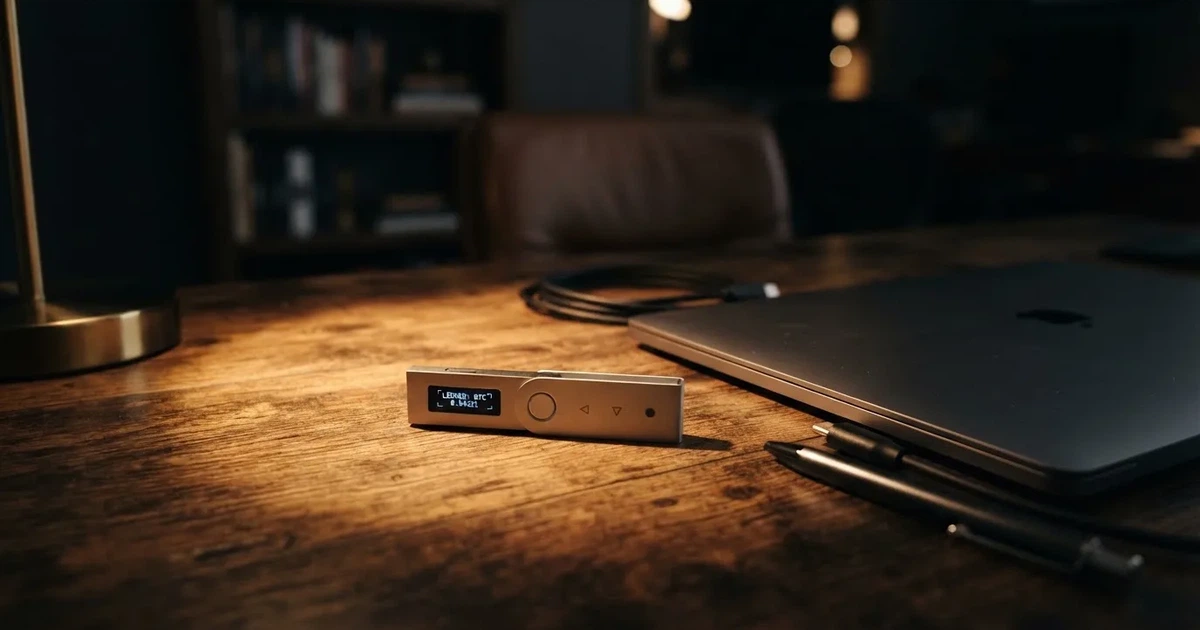
The cheap framing is that crypto betting in New Zealand simply exists. It does, in the sense that websites accept coins. What it costs a New Zealand punter is a different question, and that is the one this page answers. The Department of Internal Affairs told overseas operators serving New Zealand to withdraw with immediate effect when section 74AAA took effect on 28 June 2025; what each layer of that arrangement costs in protection, recourse and tax treatment is the substance below.
The seven brands in this comparison
The seven brands in this comparison
The list below ranks the seven bookmakers on this page, with New Zealand status in the column beside each entry. TAB and Betcha are the two online brands of the same monopoly operator — TAB NZ — and are written here as one group that appears twice for clarity. The other five brands describe themselves as crypto sportsbooks, hold licences from Curaçao, Anjouan, Tobique or none at all, and have no right to take bets from people in New Zealand. They are described, not recommended.

| Brand | New Zealand status | What the operator’s own terms state on the key’s subject |
|---|---|---|
| TAB | Licensed New Zealand operator (one of TAB NZ’s two online brands) | Fixed-odds racing and sports, tote pools, live in-app betting, safer-gambling tools built into the app |
| Betcha | Licensed New Zealand operator (one of TAB NZ’s two online brands) | Same terms as TAB — same wallet, same rules, same harm-minimisation framework |
| Telbet | Not licensed in New Zealand | Self-described crypto casino and sportsbook; no New Zealand regulatory standing |
| Winz.io | Not licensed in New Zealand | Anjouan and Tobique licence footprint; no right to take New Zealand bets |
| Rooster.bet | Not licensed in New Zealand | Tobique Gaming Commission e-gaming licence (No. 0000002), holder Novatrix SRL |
| Thunderpick | Not licensed in New Zealand | Curaçao licence OGL/2024/677/0722, holder Paloma Media B.V. |
| Roobet | Not licensed in New Zealand | Curaçao licence OGL/2024/687/0427, holder Raw Entertainment B.V. |
Why the brands sit in two groups
Only TAB and Betcha may lawfully take racing and sports bets from people in New Zealand under section 74AAA of the Racing Industry Act 2020, in force since 28 June 2025. They are not rivals: TAB NZ operates both through a 25-year partnership with Entain signed in 2023 that gives a 50/50 share of gross profits with at least $150m a year to TAB NZ for the first five years, and a one-off $100m payment from Entain to the racing sector.
The other five call themselves crypto sportsbooks and publish no New Zealand licence, because none exists that an overseas provider can hold. The Department of Internal Affairs has stated that an overseas company taking these bets from a person in New Zealand is breaking New Zealand law. Calling such a brand legal, licensed or approved in this market misstates the arrangement.
How New Zealand betting actually works
The fundamentals matter before a brand is compared. New Zealand’s frame is set by three statutes: the Gambling Act 2003, the Racing Industry Act 2020 and the Racing Industry Amendment Act 2025. Section 74AAA of the last-named Act inserted a flat prohibition: no person other than TAB NZ may offer racing betting, sports betting or other racing or sports betting to a person in New Zealand, regardless of where that person is resident or incorporated. The change took effect on 28 June 2025 and the Department told providers serving New Zealand to withdraw.
TAB NZ operates both TAB and Betcha through a 25-year agreement with Entain that runs from 2023. The arrangement gives Entain a 50/50 share of gross profits, with at least $150m a year to TAB NZ for the first five years, and includes the $100m one-off payment from Entain to the racing sector. TAB NZ’s published betting rules set out a long list of bet types from Win, Place and Each Way through Quinella, Exacta, Trifecta, First4, Doubles, Trebles, Daily Double, Running Double, Quaddie and Big6, plus Multis and Same Game Multis — multi bets whose legs come from one event. Live betting is listed in the TAB NZ apps.
The Online Casino Gambling Act 2026 covers online casino gambling only. TAB NZ winning the right to apply for a casino licence does not extend the betting monopoly. Greyhound racing is closing in stages from 1 August 2026, and from that date offshore operators may not take bets on greyhound races either.
The Racing Industry Act 2020 sets what may be bet on, who may offer it and at what age. Section 89 makes betting under 18 an offence; TAB NZ’s account-opening flow requires a verified New Zealand address and ID. The land-based casino age of 20 does not apply to betting — they are different permits with different rules.
Where protections exist and where they stop
TAB NZ’s app carries deposit limits, time-outs and self-exclusion, with the exclusion applying across both TAB and Betcha. The Gambling Helpline (0800 654 655) and its text service (8006) are listed by TAB NZ. TAB NZ pays a Problem Gambling Levy of 0.74% of its gross profit, in force from 1 July 2025 to 30 June 2028. None of these reach an account held with an offshore crypto brand. The regulator’s stated risk list is simple: an overseas operator may operate in a jurisdiction with weak consumer safeguards, risk unspent credits, and fail to pay out wins.
There is no single national online-betting exclusion register. The register the casino law will require is for online casinos only. New Zealand does not block bookmaker sites; the law puts liability on the offshore operator. Section 19(4) of the Gambling Act 2003 says an individual may not be convicted for placing a bet with an offshore betting operator in breach of section 74AAA; no source states a penalty for a player. The honest framing is that New Zealand law targets the operator, the regulator warns players of the risks and no published player-side penalty exists.
The licence picture, plainly
There is no licence register for New Zealand bookmakers because there is only this one lawful provider. No licence exists that an overseas brand can apply for. TAB NZ’s own deposit methods come only from its terms — no statutory payment rule for betting accounts (card, bank, credit, prepaid, crypto) exists in New Zealand. Account opening requires a verified New Zealand address, which is the practical gate rather than a payment-rail rule.
The offshore brands named here carry whatever licences they carry elsewhere. Winz.io states in its footer that it holds an Anjouan and Tobique licence; Rooster.bet is operated by Novatrix SRL under Tobique Gaming Commission e-gaming licence No. 0000002; Thunderpick is licensed by the Curaçao Gaming Authority under OGL/2024/677/0722; Roobet is licensed under Curaçao OGL/2024/687/0427. Telbet describes itself as a crypto casino and sportsbook on its own page and names no licence that applies in New Zealand. None of those credentials extend to taking bets from people in New Zealand under section 74AAA.
What statute looks like here
The Racing Industry Amendment Act 2025 inserted section 74AAA on 28 June 2025. The Department of Internal Affairs monitors compliance with the betting prohibition under section 92A of the Racing Industry Act 2020 and is the gambling regulator under the Gambling Act 2003. The Advertising Standards Authority’s Gambling Advertising Code binds betting advertisements: they must not target children (under 14) or young people (14 to under 18), must not encourage harm, and must be truthful with terms available; audiences judged 25% or more children or young people count as significant where accurate data exists. There is no New Zealand equivalent of a whistle-to-whistle ban. Betting affiliates are treated case by case; how exactly is not established, so nothing on this page invites readers to sign up with an offshore brand.

Staying in control of the bet
The responsible-gambling frame for this market comes from three places: TAB NZ’s own tools, the regulator’s guidance and the free support services. TAB NZ’s app lists deposit limits, time-outs and self-exclusion as standard, with the exclusion applying across both TAB and Betcha. The Department of Internal Affairs warns that an overseas operator presents risks to a player, including the potential loss of funds or inability to withdraw winnings — a statement that captures the cost of using an unregulated account.
A Problem Gambling Levy of 0.74% on TAB NZ’s gross profit runs from 1 July 2025 to 30 June 2028; the levy funds harm-minimisation work, not individual protection in an offshore dispute. Support services such as the Gambling Helpline (0800 654 655) are referenced on TAB NZ’s app listing. Offshore operators named in this guide publish their own support channels but no New Zealand complaints route reaches them.
Where the controls stop
A self-exclusion at TAB NZ is one operator. There is no single national online-betting exclusion register; the register the casino law will create is for online casinos only. A player who holds accounts at both a licensed brand and an offshore brand has to contact each separately to exclude. Offshore support takes the form each brand publishes: Telbet gives Live Chat and email; the others publish their own forms. None of it is supervised by the Department of Internal Affairs.
What “crypto” actually changes
Bitcoin’s protocol caps total issuance at 21 million coins, with the final fraction expected to be mined around 2140. Bitcoin’s genesis block was mined on 3 January 2009 by its pseudonymous creator Satoshi Nakamoto, whose real identity remains unknown. Bitcoin secures its ledger through proof-of-work, where miners compete to find a block hash below a network-set difficulty target. None of that is betting regulation. It is the rails an offshore book runs on.
There is no specific New Zealand rule on crypto deposits for betting. No payment-blocking order or bank obligation was found either. The “anonymous” pitch at offshore sportsbooks describes the rail, not the licence: a wallet may be pseudonymous while the bookmaker still asks for KYC on withdrawal. TAB NZ’s deposit methods are published in its own terms only.
The UK picture, for context
The FCA became the anti-money-laundering supervisor of UK cryptoasset businesses on 10 January 2020 under the amended Money Laundering, Terrorist Financing and Transfer of Regulations (Information on the Payer) Regulations 2017, replacing cryptoassets from 10 January 2020. The FCA will open applications for authorisation of cryptoasset firms under a new FSMA-based regime on 30 September 2026, with the regime due to start on 25 October 2027. HMRC published its first cryptoassets tax guidance for individuals on 19 December 2018, and treats the disposal of cryptoassets — selling, swapping, or spending on goods or services — as a chargeable event for Capital Gains Tax. New Zealand’s Inland Revenue takes a recreational-gambling view: recreational winnings are generally not taxable and prize money from TAB horse, dog and trotting races is not taxable, while a person who bets as a business is treated differently. That distinction matters at tax time but not at sign-up time.
The UK facts are here to mark what New Zealand does not yet have. The Department of Internal Affairs records that an overseas company taking bets from a person in New Zealand is breaking the law here; it does not prescribe a crypto rule, because the rule it writes for the operator has the same shape whether the stake is a coin or a bank transfer.
Operator write-ups
Each write-up below closes on the question the material above it actually answers. TAB and Betcha are the two online brands of the same monopoly operator; the offshore brands are described honestly as what each is and what each costs a New Zealand punter.
TAB
TAB is one of two online brands of TAB NZ, which has run the country’s racing and sports betting since the Racing Industry Act 2020 established it as the sole provider for racing and sports in New Zealand. Section 74AAA locked that position in on 28 June 2025. The brand’s app lists fixed-odds racing and sports plus tote pools, with live in-app betting, racing form, Blackbook and Jockey Challenge tools and a simplified wallet for deposits and withdrawals; Trackside live race streaming sits inside the same app. Betting rules published by TAB NZ set the standard bet types — Win, Place, Each Way, Quinella, Exacta, Trifecta, First4, Doubles, Trebles, Daily Double, Running Double, Quaddie and Big6, plus Multis and Same Game Multis.
Safer-gambling tools are built in: deposit limits, time-outs and self-exclusion, with the exclusion applying across TAB and Betcha together. The Gambling Helpline (0800 654 655) and Safer Gambling Aotearoa sit on the same app page. TAB NZ pays a Problem Gambling Levy of 0.74% on its gross profit to fund harm-minimisation work. Account opening requires a verified New Zealand address and ID; the legal betting age is 18 under section 89 of the Racing Industry Act 2020.
TAB’s costs to a punter are operator-level rather than statutorily capped, so limits are whatever the published terms say on a given day. For most readers this is the only operator where the entire local protection framework — regulator, levy, complaints route, harm-minimisation tools — applies by default.
Betcha
Betcha is the other online brand of TAB NZ, sharing the same account, wallet and rules as TAB; section 74AAA makes the two brands one operator expressed twice. The launch was framed as TAB NZ’s online answer to the kind of product an overseas crypto book offers — multi-builder markets, in-play betting, a sportsbook-style layout. The licence, the regulator and the harm-minimisation framework are identical to TAB.
For a reader weighing Betcha against TAB, the choice is a product-design choice rather than a regulatory one. The New Zealand protection frame and the deposit methods are the same. Where the two brands pitch themselves differently is the markets and the bet-builder experience. New Zealand readers comparing the two are choosing a UI, not a legal regime.
Telbet
Telbet describes itself as a crypto casino and sportsbook on its own page; a welcome offer of 200% up to 1 BTC plus 50 free spins and a 5 USDT free bet appears on its Russian-language site. It names no New Zealand regulatory standing. Under section 74AAA, Telbet is breaking New Zealand law to the extent it accepts bets from a person in New Zealand; the Department of Internal Affairs has told providers in that position to withdraw with immediate effect.
The page is descriptive: a reader who already holds an account knows what Telbet is. A reader who does not has the regulator’s own warning to read first: offshore betting sites frequently lack the New Zealand complaints framework and safer-gambling protections that define the local monopoly. No New Zealand complaints route reaches a Telbet dispute.
Winz.io
Winz.io states in its footer that it holds a licence delivered by Anjouan and Tobique. The holder is Novatrix SRL. Neither credential extends to taking bets from people in New Zealand under section 74AAA, which is the operative rule on this page. New Zealand’s Gambling Helpline, Safer Gambling Aotearoa and the Department of Internal Affairs’s complaints function do not reach a Winz.io account.
Winz.io is what it is — a crypto casino and sportsbook on an offshore licence footprint. The cost to a New Zealand punter is exactly the regulator’s stated risk list, plus the possibility that any dispute is resolved under Winz.io’s own terms and Anjouan or Tobique process rather than New Zealand law. For a reader comparing this brand against a licensed one, the trade-off is product range against protection.
Rooster.bet
Rooster.bet is operated by Novatrix SRL, a company incorporated in Costa Rica under registration number 3-102-893958, under e-gaming licence No. 0000002 issued by the Tobique Gaming Commission. The structure mirrors Winz.io’s in corporate form (Novatrix) and in licence footprint (Tobique). Neither credential extends to New Zealand under section 74AAA, so the consumer frame is identical: no New Zealand regulator, no New Zealand complaints route, no harm-minimisation tool unless the brand itself publishes one.
This is a brand-by-brand repetition: the offshore part of the market is a uniform legal posture under New Zealand rules, no matter whose shell company or whose licence. The differentiator is the product, not the protection.
Thunderpick
Thunderpick is owned and operated by Paloma Media B.V., a Curaçao company under company number 146988, licensed by the Curaçao Gaming Authority under licence number OGL/2024/677/0722. The brand pitches itself to the esports-leaning punter, which is its actual identity. Curaçao credentials do not reach into New Zealand under section 74AAA; the operator has been told to withdraw from serving New Zealand customers and the regulator’s warning applies in full.
For a reader who came here for crypto-and-esports product, the choice is between a brand with an esports-heavy product on a Curaçao licence and a licensed brand (TAB or Betcha) whose esports range has to be checked on the day. The protection frame is whatever the Curaçao process gives a New Zealand resident, which is to say: not what New Zealand law provides.
Roobet
Roobet is a brand name of Raw Entertainment B.V., registration number 157205, Korporaalweg 10, Curacao, licensed under Curaçao licence OGL/2024/687/0427. The brand carries a strong name recognition among crypto sportsbook readers. The Curaçao licence does not extend into New Zealand under section 74AAA; the Department of Internal Affairs’s warning applies unchanged.
For a reader making the comparison with a licensed NZ brand, the product breadth is the headline — Roobet is a known crypto brand — and the protection frame is whatever sits behind a Curaçao dispute, which is not the New Zealand framework. The head-to-head line with TAB NZ comes down to what kind of bettor the reader is and what they weight most: product range on one side, regulator and complaints framework on the other.
Frequently asked questions
How does anyone bet with crypto in New Zealand without a New Zealand-licensed bookmaker taking their stake?
A punter holding crypto can send a deposit to any number of offshore sportsbooks that accept coins. The transfer itself is not the regulated step. Under section 74AAA of the Racing Industry Act 2020, an overseas company offering sports or racing bets to a person in New Zealand is breaking New Zealand law; section 19(4) of the Gambling Act 2003 says an individual may not be convicted for placing such a bet. The regulatory weight falls on the offshore operator, while the player assumes the risks of using a site beyond the New Zealand regulator’s reach.
Which payment methods does TAB NZ accept, and where are they listed?
TAB NZ lists its accepted deposit methods in its own published terms; there is no statutory rule on which payment rails TAB NZ must accept. Account opening requires a verified New Zealand address and ID, which is the practical gate rather than a payment-rail rule. The current method list and any method-specific limits are operator-level and published at the source — readers check TAB NZ’s terms or app for what is on offer at sign-up or any later change.
Which bookmaker may lawfully take sports and racing bets in New Zealand?
TAB NZ holds the only lawful position. The Racing Industry Amendment Act 2025 inserted section 74AAA on 28 June 2025, making TAB NZ the sole provider for racing and sports betting to a person in New Zealand, regardless of where that person is resident or incorporated. TAB NZ operates two online brands, TAB and Betcha, under a 25-year partnership with Entain signed in 2023. There is no licence register for betting because there is only one lawful provider, and no licence exists that an overseas brand can apply for.
What does a player lose by betting with a bookmaker that has no New Zealand licence?
The regulator’s own warning highlights that overseas operators may operate in jurisdictions with few consumer protections. None of the New Zealand harm-minimisation tools — deposit limits, time-outs and self-exclusion at TAB NZ — apply to an offshore account. Further, no New Zealand complaints route reaches an offshore dispute. Support services like the Gambling Helpline (0800 654 655) are available to New Zealand residents regardless of where they bet, though they lack the integrated account-level controls of a local operator. The offshore operator may also continue accepting deposits after closing an account under New Zealand’s supervision.
From what age can bets be placed with TAB NZ, and what is checked when opening an account?
TAB NZ sets 18 as the legal age for betting under section 89 of the Racing Industry Act 2020; land-based casino gambling is 20 under different rules. Account opening at TAB NZ requires a verified New Zealand address and ID, and the brand is required to keep the risks of problem and underage gambling minimised. A punter under 18 betting at TAB NZ commits an offence under the same section, and the brand’s verification flow exists to prevent that.
Are betting winnings taxed in New Zealand?
Inland Revenue’s published guidance treats recreational gambling winnings as generally not taxable, and prize money from TAB horse, dog and trotting races is specifically not taxable. The treatment is different for a person who bets as a business — that is a case-by-case matter rather than a clear rule, and the same Inland Revenue guidance recommends consulting them or an accountant. Cryptoassets disposed of in the course of betting — swapped, spent or sold — may trigger a Capital Gains Tax event under HMRC’s UK framework, which is the reference point most readers will meet first; New Zealand’s frame is the Inland Revenue guidance noted above.
Published by the Nodepositbetsnz team.