
Arbitrage Betting in New Zealand: What the Numbers Allow, and What the Law Allows You to Do with Them
 Available in US
Snapshot as of 30 October 2026 against the Racing Industry Act 2020 (section 74AAA) and the Department of Internal Affairs register of licensed operators.
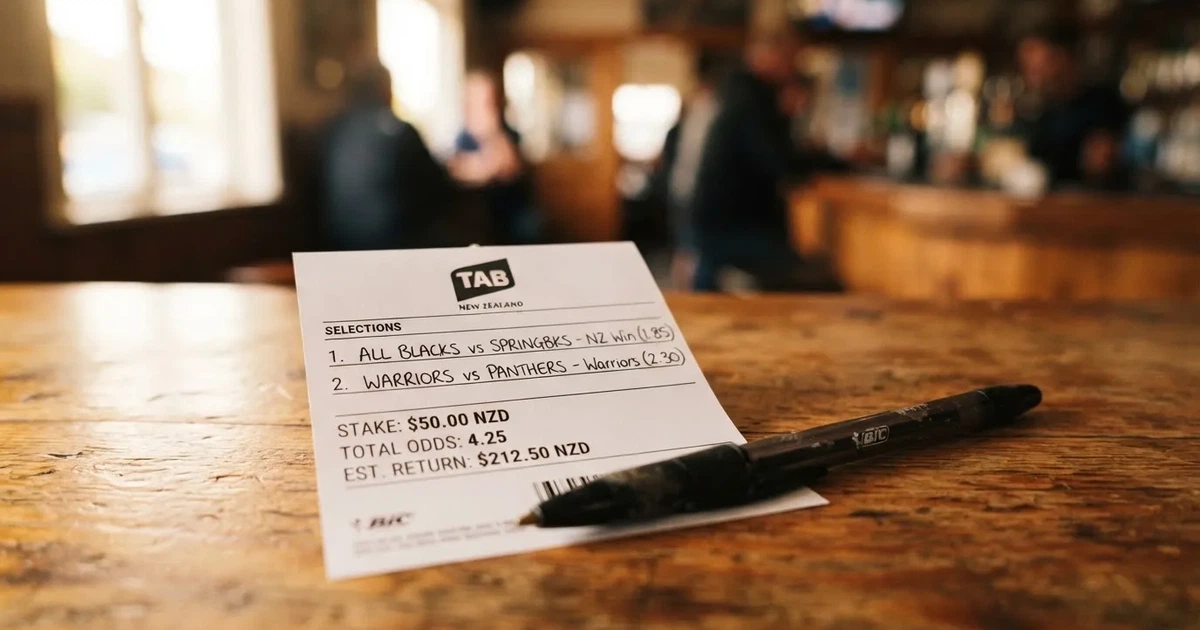
Arbitrage betting rests on a tidy piece of arithmetic. Take a match with two possible outcomes, find a bookmaker willing to pay $1.90 on outcome A and another willing to pay $1.90 on outcome B, and stake the right amount on each. Whichever side wins, the total return beats the total outlay. The idea is older than online betting. What is new, since 28 June 2025, is that anyone sitting in New Zealand who wants to try it has only two lawful websites to do it on, and those two sites are run by the same operator group. The rest of this page works out what the technique is worth, what it costs in practice, and what the law has done to the conditions that made it possible elsewhere.
- The Selection Problem: Why Two Odds Decide Whether a Bet Exists
- The Fundamenta of the New Zealand Market: Two Brands, One Operator
- The Statute: Section 74AAA and What the Amendment Actually Did
- Responsible Gambling: What Tools the Lawful Operator Has to Offer
- Crypto, Bitcoin and the Pseudonymous Edge That Isn’t
- Strategy, Forecasts and What Tipsters Actually Sell
- The Comparison: What Each Reviewed Operator Actually Offers for an Arbitrage Punter
- The Margin: What a Two-Way Market at 1.90 / 1.90 Actually Costs
- Frequently Asked Questions
The Selection Problem: Why Two Odds Decide Whether a Bet Exists
An arbitrage opportunity exists when the odds cover all mutually exclusive outcomes of an event and their implied probabilities add up to less than 1.
Strip the technique down and the whole thing is one inequality. Convert each decimal price to an implied probability by dividing 1 by the price — $1.90 implies a 52.6% chance, $2.50 implies a 40% chance, $1.20 implies an 83.3% chance. Add the implied probabilities of every possible outcome. If the total lands below 100%, the bookmakers have mispriced the event relative to each other, and a stake on each outcome, sized correctly, returns more than it costs. If the total is at or above 100%, no combination of stakes can produce a risk-free profit on this market.
That arithmetic is the whole selection criterion. Everything else — the live scanner software, the tipster feeds, the Telegram channels, the lists of arbitrage opportunities — is plumbing to find prices that satisfy it.
A 2012 study by Franck, Verbeek and Nuesch, still the most cited academic work on the topic, found that 98% of arbitrage opportunities return less than 1.2%, so arbitrage bets involve relatively large sums of money. The maths says why. If the combined implied probability of a two-outcome event is 0.985 instead of 1, the profit margin on the bet is 1.5% of turnover — small enough that the bettor needs to commit thousands to make hundreds. Below a few hundred dollars of total stake, the edge barely covers the time spent finding the bet. Arbitrage is a volume business run by people who can move money across accounts at speed.
How the stake is split between two outcomes
The mechanics are simpler than they look. For a two-outcome market with odds O₁ on outcome A and O₂ on outcome B, the share placed on A is (1 ÷ O₁) divided by (1 ÷ O₁ + 1 ÷ O₂), and the share on B is the rest. At $1.90 and $1.90, each leg takes 50% of the bankroll. At $2.10 and $1.80, the $2.10 side takes about 46.2% and the $1.80 side takes about 53.8%. The bankroll itself is decided by the largest stake the smaller-priced leg will tolerate, which in arbitrage is set by the bookmaker’s per-bet or per-event cap rather than by the bettor’s appetite.
The shape of the split explains why arbitrage is a grind. The lower the combined margin, the smaller the per-bet profit, and the larger the bankroll needed to make that profit feel worthwhile. For a 1.5% combined margin on a NZ$1,000 bankroll, a winning sequence returns NZ$15 before any account restrictions kick in.
Why bookmakers notice
Bookmakers usually detect arbitrage betting quickly and view it unfavourably; maximum wager limits on such accounts often drop sharply, and in the past half of an arbitrage bet may be cancelled or the account closed. The detection has got cheaper as data has got better: a customer who places one bet on each side of a tennis match, in sizes that match the implied probabilities, stands out. So does a customer whose account is in the black over thousands of bets at a margin that no recreational punter ever hits.
This is the part the marketing material leaves out. Arbitrage is sold as a safe bet; the technique attempts a balanced position on a single event, and only at the moment of placement. This offers no deposit or payout guarantee. Over weeks and months, the risk shifts from the bet to the account. A stake limit cut to NZ$1 reduces the per-event take to a few cents. A closed account strands whatever balance sits inside it at the time. Offshore operators, in particular, have wide discretion to void bets retroactively when they decide an arbitrage pattern fits.
The Fundamenta of the New Zealand Market: Two Brands, One Operator
Since an amendment to the Racing Industry Act 2020 took effect on 28 June 2025, TAB NZ and its online sister brand Betcha are the only operators allowed to take online sports and racing bets in New Zealand.

That sentence ends the premise of an arbitrage strategy before it starts. Arbitrage, by construction, needs two bookmakers holding different opinions on the same event. TAB and Betcha are the two online brands of TAB NZ, run by Entain under a 25-year agreement signed in 2023 that gives Entain a 50/50 share of gross profits, with at least NZ$150m a year going to TAB NZ for the first five years, and Entain pledged a one-off NZ$100m payment to the racing sector. Their prices are set inside one trading operation. Where one goes, the other follows within seconds, and any visible gap between them closes before a punt can act on it.
New Zealand players do meet other brands. The Department of Internal Affairs told unlicensed providers to withdraw with immediate effect, but it does not geo-block offshore websites. Brand-name betting sites — sportsbooks licensed in Curaçao, the Comoros, Costa Rica or Anjouan — still resolve from a New Zealand address. What they cannot do, lawfully, is take a bet on a New Zealand race or a New Zealand sporting event from a New Zealand resident. How consistently they enforce that is a separate matter, and the answer varies by site.
What an offshore account can and cannot offer
A New Zealand resident who opens an account with an offshore bookmaker does so without a New Zealand licence protecting them. Three things follow:
- No New Zealand complaints route or harm-minimisation framework reaches the offshore brand. A dispute over a voided bet or a stalled withdrawal has to go through the operator’s own customer service and, at most, the regulator named in the brand’s terms. That regulator is usually based overseas and operates under its own country’s rules.
- The operator’s stake limits and account closures apply on the operator’s own terms. An arbitrage pattern that survives at TAB NZ for months can be cut off at an offshore brand within a week.
- The price feed is the same feed the rest of the world sees, which is where any actual arbitrage gap lives. The gap is there for a few seconds, not for the half-hour a casual punter takes to look.
The honest read is that arbitrage is a technique built for a market with many bookmakers. New Zealand has, by statute, one. Any other brand sits offshore, prices on a global feed, and answers to a regulator that has no presence in this country. The technique still works on paper. The conditions that make it work in practice have been removed.
Betcha versus TAB: not a comparison
Betcha is one of two brands, with TAB NZ, that may lawfully take online sports and racing bets from people in New Zealand since 28 June 2025. They are not two bookmakers in competition. They are two front ends for the same trading desk. Betcha’s pitch is the social layer: a daily Toolbox with odds boosts and insurance tools for bets that do not land, a Bet Social section where punters chat, follow tipsters and share bets or pools, and a Playbook with tips and match analysis. TAB’s pitch is the racing product: the full set of pool bet types — Quinella, Exacta, Trifecta, First4, Quaddie, Big6 — plus fixed-odds sports. A punter looking for a Same Game Multi finds more sportsbook depth on TAB. A punter who likes following other people’s bets finds the social product on Betcha. Neither offers a price the other does not.
The Statute: Section 74AAA and What the Amendment Actually Did
The Racing Industry Amendment Act 2025 inserted section 74AAA into the Racing Industry Act 2020. The section says no person other than TAB NZ may offer racing betting, sports betting or other racing or sports betting to a person in New Zealand, regardless of where that person is resident or incorporated. The change took effect on 28 June 2025. The Department of Internal Affairs is the regulator under the Gambling Act 2003 and monitors compliance with the betting prohibition under section 92A of the Racing Industry Act.

The law does not block New Zealand residents from reaching offshore sites. It puts the liability on the offshore operator. The penalty for breaching section 74AAA is not stated in the section, and no prosecution of an offshore bookmaker was found in published sources. What the Department of Internal Affairs has done, repeatedly, is tell operators serving New Zealand customers to withdraw with immediate effect.
For the player, section 19(4) of the Gambling Act 2003, inserted in 2025, says an individual may not be convicted for placing a bet with an offshore betting operator in breach of section 74AAA. No source states a penalty for a player. The honest framing, drawn from the Department of Internal Affairs’ own statements, is that New Zealand law targets the operator, that the regulator warns players of the risks of dealing with operators outside the New Zealand harm-minimisation framework, and that no published penalty for a player was found. It is not legal for the offshore bookmaker. It is not, as far as the published record goes, criminal for the New Zealand resident who places the bet.
What is and is not covered
The prohibition covers racing and sports betting from anyone other than TAB NZ. The Online Casino Gambling Act 2026 licenses online casino gambling only and does not extend the betting monopoly — TAB NZ’s winning the right to apply for a casino licence does not let any other casino brand take sports bets. Greyhound racing is closing in stages from 1 August 2026, and from that date offshore operators may not take bets on greyhound races either.
What may be bet on through TAB NZ is broad: racing codes (thoroughbred, harness, greyhounds until 1 August 2026), fixed-odds sports, Same Game Multis, and a large catalogue of pool bet types on racing. Live betting is listed in the TAB NZ apps; any statutory restriction on in-play markets is not established. Bets on politics and novelty markets are not established either way.
Tax and what Inland Revenue says
For the player, Inland Revenue guidance says recreational gambling winnings are generally not taxable and prize money from TAB horse, dog and trotting races is not taxable. A person who bets as a business is a different case, and that is general information, not tax advice. Operator side: TAB NZ pays a Problem Gambling Levy of 0.74% (in force from 1 July 2025 to 30 June 2028). Overseas operators supplying New Zealand residents pay online gambling duty — 12% of profits since 1 July 2024, and 16% from 1 January 2027. A duty being payable does not make an offer lawful. The point-of-consumption charge on offshore racing and sports bets ceased on 30 June 2026.
Advertising and the ASA Code
The Advertising Standards Authority’s Gambling Advertising Code applies to betting advertisements: ads must not target children (under 14) or young people (14 to under 18), judged by context, appeal and expected audience, with 25% or more of the audience counting as significant where accurate data exists, must not encourage harm, and must be truthful with terms available. New Zealand has no equivalent of a “whistle-to-whistle” ban for betting.
Responsible Gambling: What Tools the Lawful Operator Has to Offer
TAB NZ provides safer gambling tools in its app, namely deposit limits, time-outs and self-exclusion, and lists the free New Zealand gambling helpline 0800 654 655 and the text line 8006. The framework is the standard one — a punter can set a daily, weekly or monthly deposit cap on the TAB account, take a cooling-off time-out ranging from 24 hours to several weeks, or self-exclude entirely, in which case TAB NZ closes the account, returns any balance, and bars re-registration for the chosen exclusion period.
An exclusion at TAB NZ applies across both brands. A punter who self-excludes from TAB also self-excludes from Betcha. That is a real consumer-protection feature and it does not exist, in the same form, at any of the offshore brands a New Zealand resident might reach. Offshore operators have their own responsible-gambling pages and may offer deposit limits or self-exclusion, but the obligations sit inside the operator’s terms rather than inside a New Zealand statute.
For help outside the operator, the free Gambling Helpline on 0800 654 655 (text 8006) is the entry point, and Safer Gambling Aotearoa runs the counselling and education programmes funded by the Problem Gambling Levy. The levy, set at 0.74% from 1 July 2025 to 30 June 2028, is paid by TAB NZ. There is no single national online-betting exclusion register; the register that the 2026 online casino law will require is for online casinos only.
The minimum age for TAB NZ betting is 18 (betting under 18 is an offence under section 89 of the Racing Industry Act 2020). Land-based casinos are 20 — different limit, different product, never merge the two.
Crypto, Bitcoin and the Pseudonymous Edge That Isn’t
The core feature searches against this topic land on a clean technical claim: a bettor who funds an account with bitcoin, settles the bet, and withdraws back to a non-custodial wallet, leaves a thinner paper trail than a bettor who uses a bank card. The claim is true. The relevance to arbitrage in New Zealand is thin.
The arbitrage technique itself does not care how the bettor funds the account. What it needs is two bookmakers whose prices disagree by enough to cover the bookmaker’s margin, fees and withdrawal friction, and stay disagreed for long enough to place both bets. Bitcoin speeds up the funding leg; it does not change the odds. If the arbitrage opportunity exists at all, it exists on the price screen, and a bank card clears just as well. If it does not exist, no funding method conjures it.
There is no published New Zealand rule on crypto deposits at TAB NZ. TAB NZ’s deposit methods and limits are operator-level and come from its terms, so the right move for a punter is to read TAB NZ’s deposit-method page before opening an account. The Department of Internal Affairs warns that overseas operators may be in jurisdictions with minimal consumer safeguards, may not return unspent credits and may not pay out large wins. A crypto deposit at such an operator sits behind every one of those risks.
A second strand of marketing claims “anonymous” betting, by which the seller usually means “no KYC at sign-up”. TAB NZ accounts need a verified New Zealand address and identity. Offshore operators range widely: some ask for nothing at deposit and ask for everything at withdrawal; some ask for everything at deposit. A bettor who avoids KYC is, by definition, outside the New Zealand harm-minimisation framework and outside any New Zealand complaints route. The privacy gain is real; the protection cost is the same.
Why blockchain transparency cuts the wrong way
The same ledger that makes crypto attractive to the bettor makes it useful to the bookmaker. A wallet address that has received funds from a known exchange, has interacted with a known mixer, or has paid into a known bookmaker’s deposit address is identifiable on-chain. Operators who run their own chain analytics — and most large operators do, via third-party vendors — can score a wallet’s risk profile before the first bet lands. The result is the same arbitrage detection as a credit-card-funded account, run a little earlier. The pseudonymity is more fragile than the marketing makes it sound.
Strategy, Forecasts and What Tipsters Actually Sell
Arbitrage is sold, in the tipster market, as a system. The system has three parts: a scanner that watches hundreds of bookmakers and flags price gaps, a staking calculator that sizes each leg of the bet to clear the margin, and a bankroll large enough to make the small per-bet edge into real money. Each part is genuine. None of them is arbitrage-specific — a scanner that flags price gaps is also useful to a punter looking for value bets; a staking calculator is a flat sheet; a large bankroll is useful for anything that pays on volume.
What tipsters actually sell is access to the scanner and a community of people running the same strategy at the same time. The community is the load-bearing part. A scanner pointing at the same price gap that fifty thousand subscribers are also watching is a scanner whose gaps close before any of them can act. The tipster economy runs on being faster than the next subscriber, not faster than the bookmaker.
The forecaster angle lands the same way. “Arbitrage bet today” and “arbitrage betting tips today” both assume the bettor needs a tip. They do not. The bet is the price gap, not the predicted outcome. A forecaster who picks the winning side of a tennis match at $2.10 has done a useful job for a recreational punter. The same forecaster has done nothing for an arbitrage bettor, who needs to find a market priced at a combined 0.98 and stake both sides.
Bankroll, turnover and the grind
A 1.5% combined margin means a bettor keeps NZ$1.50 of every NZ$100 of total stake across both legs, before any fees and before any account restrictions. Over a working week of, say, NZ$20,000 in total stake, that is NZ$300 of gross profit. The time cost of finding the gaps, the bank transfer fees between accounts, the occasional voided bet, and the bookmaker’s withdrawal friction eat most of that. The bankroll has to be large enough that NZ$300 of weekly net is worth the time it takes.
Bankroll sizing is also the constraint arbitrage bettors ignore at their cost. A NZ$2,000 bankroll earns about NZ$30 a week at the same combined margin, before the bookmaker’s per-bet cap starts to bite. Per-bet caps at TAB NZ are set by the operator’s own terms and by event type; a NZ$2,000 bankroll can run out of headroom on a single Super Rugby Pacific match before the weekend is over.
Why the system survives the law
A New Zealand-resident arbitrage bettor has, since 28 June 2025, two options. The first is to run the strategy inside TAB NZ alone — which is not arbitrage, because there is only one trading desk setting both prices. The second is to run it across TAB NZ and an offshore brand — which carries the operator-side legal risk to the offshore bookmaker and the player-side risks the Department of Internal Affairs has named.
The strategy itself is unchanged. The market structure that made it work in jurisdictions with dozens of licensed bookmakers has been removed in New Zealand by statute.
The Comparison: What Each Reviewed Operator Actually Offers for an Arbitrage Punter
The table below sits beside the prose, not in place of it. It sets out the New Zealand status of each brand the page reviews, and what the brand’s own terms state on the matters an arbitrage punter cares about — price feed, market depth, bet-type coverage and stake-limit framework. The facts in the third column come from each operator’s own published material; the second column states the legal status under the Racing Industry Act 2020.
| Brand | New Zealand status | What the operator’s own terms state on the relevant matters |
|---|---|---|
| TAB | TAB NZ brand (Racing Industry Act 2020, section 74AAA) | Pool bet types (Win, Place, Each Way, Quinella, Exacta, Trifecta, First4, Double, Treble, Daily Double, Running Double, Quaddie, Big6), fixed-odds sports, Multis and Same Game Multis; live betting listed in the apps; deposit limits, time-outs and self-exclusion available |
| Betcha | TAB NZ brand (Racing Industry Act 2020, section 74AAA) | Daily Toolbox with odds boosts and insurance tools for bets that do not land; Bet Social section for sharing bets and pools; Playbook with tips and match analysis; prices set by the same trading desk as TAB |
| Glorion | Not licensed in New Zealand | Live chat and email support; customers over 18 only; no published New Zealand-licence claim |
| BillyBets | Not licensed in New Zealand | Decimal (2.00), American (+100) and Fractional (1/1) odds formats; cashback and reload bonuses on sports; coin shop and five-level VIP programme |
| Roobet | Not licensed in New Zealand | Curaçao licence OGL/2024/687/0427, holder Raw Entertainment B.V.; no New Zealand-licence claim |
| 22Bet | Not licensed in New Zealand | Curaçao licence 8048/JAZ, holder TechSolutions Group N.V.; singles, accumulators, systems, chains and live betting with real-time odds and score updates |
| Rabona | Not licensed in New Zealand | Curaçao licence; launched 23 December 2019 as the sixth sportsbook of the Soft2Bet group |
| Golden Panda | Not licensed in New Zealand | Dedicated Sports Terms and Conditions covering fixed-odds, Combo Bets, Bet Builder, live scoreboards and broadcasts, stake and odds limits |
| BetNinja | Not licensed in New Zealand | Licence from the Union of the Comoros; no New Zealand-licence claim |
| FunBet | Not licensed in New Zealand | Sportsbook on football, ice hockey, American football, basketball, volleyball, tennis, rugby and baseball; live betting; bookmaker described as open 24/7 |
The table is descriptive. None of the rows marked “Not licensed in New Zealand” gives an arbitrage punter a workable edge under the current statute, and the rest of this section says why.
TAB
TAB is the dominant racing brand in New Zealand and the half of TAB NZ that carries the full pool-bet catalogue — Quinella, Exacta, Trifecta, First4, Quaddie, Big6 and the fixed-odds sports product that sits beside them. The fixed-odds card runs Same Game Multis on most major sports, and live betting is listed in the apps. The deposit method set is the standard New Zealand one: bank card, bank transfer, POLi. The safer-gambling tools — deposit limits, time-outs and self-exclusion — are in the app, and a self-exclusion applies across the TAB NZ brands. For an arbitrage punter, the relevant point is that the prices here are the prices an offshore brand also sees, with a delay measured in seconds. The arbitrage gap lives, when it lives, on the offshore side, not here.
Betcha
Betcha sits beside TAB as the second online brand of TAB NZ, with a social-product layer rather than a separate trading desk. The daily Toolbox carries odds boosts and an insurance tool for bets that do not land. The Bet Social section is where the platform sets itself apart: punters chat, follow tipsters, share bets and pools, and copy each other’s bets. The Playbook runs match analysis. For an arbitrage punter, the comparison with TAB is a comparison between two windows on the same prices. A social product on a bookmaker with no price disagreement is a social product, not an arbitrage opportunity.
Glorion
Glorion offers live chat and email support, accepts customers over 18, and names no licence that applies in New Zealand. The brand is one of the offshore sportsbooks a New Zealand resident can still reach, and the Department’s warning applies: no New Zealand complaints route or harm-minimisation framework reaches it. From an arbitrage angle, what the published material shows is a generalist offshore brand with a customer-service channel and an age gate; prospective bettors must scrutinize the operator’s specific market depth independently.
BillyBets
BillyBets supports three odds formats — Decimal (2.00), American (+100) and Fractional (1/1) — and lists cashback and reload bonuses on sports, a coin shop where coins earned through depositing, betting, tournaments and challenges can be exchanged for free bets and free spins, and a five-level VIP programme. From an arbitrage angle, the price feed and the bet-type coverage are the relevant facts, and the brand’s own pages are where they live. The fact the page can state is the format support and the promotional structure; the price-feed detail is not in the published material and is what a punter checks before opening an account.
Roobet
Roobet is a brand name of Raw Entertainment B.V., registration number 157205, Korporaalweg 10, Curacao, licensed under Curaçao licence OGL/2024/687/0427. A Curaçao licence gives no right to take bets from people in New Zealand. The relevant facts for an arbitrage punter are the licence lineage (the licence is recent and the holder is a Curaçao-registered entity), the absence of a New Zealand-licence claim, and the standard offshore-brand caveats on dispute resolution. Deep-market availability for New Zealand events remains unverified here.
22Bet
22Bet takes single bets, accumulators, systems and chains, and offers live betting with real-time odds and score updates. The Curaçao licence 8048/JAZ names TechSolutions Group N.V. as the holder. Like the other Curaçao-licensed brands in this set, the licence gives no right to take bets from people in New Zealand. The breadth of bet types — particularly chains and systems, which let a punter construct multi-event bets with linked conditions — is what distinguishes the brand’s published offering from a narrower sportsbook.
Rabona
Rabona launched on 23 December 2019 as the sixth online sportsbook of the Soft2Bet group, and runs under a Curaçao licence. The launch date and the group affiliation are the facts available from the brand’s own published material; the price-feed depth, market margin, and the question of whether the brand carries enough New Zealand-targeted events to act as a second leg of an arbitrage bet, sit on the live sportsbook page. From the angle of this comparison, what matters is that the brand is one of the offshore sportsbooks a New Zealand resident can reach, that no New Zealand-licence claim attaches to it, and that the Department’s consumer-protection warnings apply.
Golden Panda
Golden Panda publishes dedicated Sports Terms and Conditions covering fixed-odds betting, Combo Bets, the Bet Builder feature, live scoreboards and broadcasts, and stake and odds limits. The presence of a dedicated sports T&Cs page is a useful signal — it sets out stake limits and bet-type rules in a way that gives an arbitrage punter something concrete to read. The brand names no licence that applies in New Zealand. The stake-limit framework is the relevant fact for an arbitrage punter, because the per-bet cap is what binds the strategy at the brand’s primary book.
BetNinja
BetNinja states that it is licensed to conduct online gaming operations by the Union of the Comoros. The licence gives no right to take bets from people in New Zealand, and the brand names no New Zealand-licence claim. Bettors must independently confirm if the sportsbook offers sufficient event coverage for their purposes before opening an account.
FunBet
FunBet’s sportsbook offers odds on football, ice hockey, American football, basketball, volleyball, tennis, rugby and baseball, with live betting and a bookmaker described as open 24/7. The sport set is broad and the rugby coverage is the relevant inclusion for a New Zealand punter; the licence position is the same as the other offshore brands in this comparison. The brand names no licence that applies in New Zealand.
What the comparison actually says
Read down the second column, the comparison has a sharp edge. The two brands a New Zealand resident can lawfully bet with are the two brands of one operator. The eight brands below them are offshore, unlicensed in New Zealand, and covered by the Department of Internal Affairs’ consumer-protection warnings. For an arbitrage punter, the conclusion is structural rather than competitive: the two lawful brands do not disagree on price, and the eight unlicensed brands disagree on price only on the terms of a regulator who has no presence in this country. The arbitrage edge, where it exists, sits inside a market structure the New Zealand statute has chosen not to permit.
The Margin: What a Two-Way Market at 1.90 / 1.90 Actually Costs
For a market with decimal odds O₁ on outcome A and O₂ on outcome B, the payout share is 1 divided by (1/O₁ + 1/O₂) and the margin is 1 minus the payout share. This is what the bookmaker keeps of every unit bet on this market.
Take an illustrative two-way market priced at 1.90 on each side. The implied probability of each outcome is 1 ÷ 1.90, or about 52.6%. The combined implied probability is 52.6% + 52.6%, or about 105.3%. The payout share is 1 ÷ 1.053, or about 95.0%. The margin is 1 minus the payout share, or about 5.0%.
That 5.0% is what the bookmaker keeps, on average, of every dollar bet on this market. It is also the breakeven line for an arbitrage bet. To clear it, a bettor needs two bookmakers pricing the same market at a combined implied probability below 1.000, which is the same as a combined margin below zero. At 1.90 / 1.90 the overround is 5.3% and the margin is 5.0% — the bookmaker is ahead and the bettor is not.
For an arbitrage to exist on a market of this shape, one side has to be longer than the breakeven price. A combined 0.98 market — say, 1.96 and 1.96 — gives a payout share of about 98.0% and a margin of about 2.0% before any arbitrage kicker. A combined 0.985 market, where the longer price on one side pushes the combined implied probability below 1, gives a thin arbitrage margin of 1.5% of turnover. Below 1.0% combined margin, the per-bet profit falls below what most arbitrage bettors consider worth the effort.
The result of the calculation is not a number; it is a band. At 1.90 / 1.90, no arbitrage exists and the bookmaker keeps about 5.0% of turnover. At deeper prices — 1.96 / 1.96 — no arbitrage exists either and the bookmaker keeps about 2.0%. An arbitrage exists only when the combined implied probability drops below 1.000, and the gap between the two is the size of the edge. For an arbitrage punter in New Zealand, the question is not what the margin of a single market is. It is whether two markets, held by two different operators, ever diverge enough to push the combined implied probability below 1.000 — and, with TAB NZ and Betcha running the same prices, the structural answer is that they do not.
Frequently Asked Questions
Does sports arbitrage betting work?
Yes, in the narrow sense: when two bookmakers price the same market at a combined implied probability below 1, a bet on each outcome returns more than the total stake. No, in the wider sense: in New Zealand the two online brands of TAB NZ run the same trading desk, and offshore brands a New Zealand resident can reach operate outside the New Zealand harm-minimisation framework. The arithmetic works; the conditions do not.
How to arbitrage bet?
Find two bookmakers whose prices on the same market give a combined implied probability below 1, calculate the stake on each leg so the payout is equal whichever outcome wins, place both bets before the price moves, and withdraw the balance before the operator notices the pattern. In New Zealand, the first step runs into the single-operator market created by section 74AAA of the Racing Industry Act 2020.
How to do arbitrage betting?
Open accounts with two or more bookmakers, fund each account, watch a price scanner or manually compare markets, identify gaps whose combined implied probability sits below 1, and size each leg so the payout matches. The bookmakers’ fastest detection is a customer whose bets across two sides of the same event come in at sizes that match the implied probabilities; account limits drop sharply once the pattern shows up.
Which bookmaker may lawfully take sports and racing bets in New Zealand?
Since 28 June 2025, only TAB NZ, through its two online brands TAB and Betcha, may take online sports and racing bets from a person in New Zealand, regardless of where that person is resident or incorporated. The law is section 74AAA of the Racing Industry Act 2020, and there is no licence to apply for and no licence register for bookmakers.
How is the return on a bet worked out from the stake and the odds?
Return equals stake multiplied by the decimal odds, and net profit equals stake multiplied by (odds minus 1). A NZ$10 stake at $2.50 returns NZ$25 and produces NZ$15 of net profit; a NZ$10 stake at $1.50 returns NZ$15 and produces NZ$5 of net profit. For a combination bet the odds of the legs multiply into one price.
What is the bookmaker’s margin and how can it be seen in the odds?
The bookmaker’s margin is what the bookmaker keeps, on average, of every unit bet on a market. For a two-outcome market with decimal odds O₁ and O₂, the payout share is 1 divided by (1/O₁ + 1/O₂) and the margin is 1 minus that payout share. At 1.90 / 1.90 the payout share is about 95.0% and the margin is about 5.0%, which is the bookmaker’s edge on every dollar bet on this market.
Written by the editors at Nodepositbetsnz.