
Boxing Betting in New Zealand: Who Takes Your Bet, What the Odds Mean, and What It Costs
 Available in US
Current as of 30 October 2026 · verified against the Racing Industry Act 2020 (section 74AAA) and TAB NZ’s own published terms.
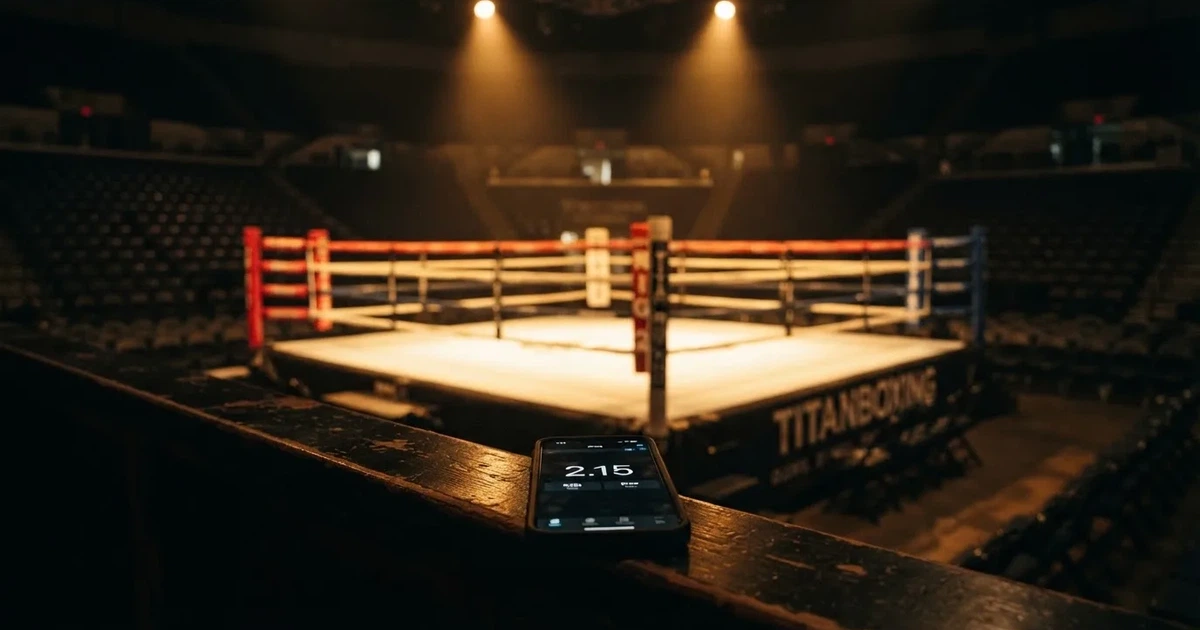
Boxing in New Zealand sits inside a market that was reshaped in 2025. Since 28 June that year, an amendment to the Racing Industry Act 2020 has named TAB NZ — and its online sister brand Betcha — as the only operators allowed to take online sports and racing bets from people in New Zealand. The Department of Internal Affairs told unlicensed providers serving the country to withdraw. That is the frame the rest of this page sits inside: where boxing can be bet on, how the odds are built, and what the bonus bets and boosted-odds promotions that TAB and Betcha actually run look like once the marketing language is set aside.
- Bonus Bets, Promotions, and What They Actually Cost
- Tips, Forecasts, and the Strategy That Does Not Exist
- Bet Types, Odds, and How a Boxing Market Is Built
- Boxing: The Sport, the Cards, and What the Bookmaker Prices
- The Bookmakers: TAB, Betcha, and Eight Offshore Alternatives
- What the Boxing Market in New Zealand Actually Looks Like
- The Help That Is There, and the Help That Is Not
- Tax, Advertising, and the Things That Sit in the Background
- Reading a Boxing Promotion Before Claiming It
- The Margin and What It Costs
- Where the Page Stops and the Operator’s Terms Begin
- Frequently Asked Questions
Bonus Bets, Promotions, and What They Actually Cost
“Bonus bet.” “Free bet.” “Boosted odds.” The language sits at the front of every TAB NZ and Betcha promotion, and it sits there for a reason: a punter reading it in a hurry is meant to feel the giveaway, not the arithmetic. The arithmetic is what decides whether a promotion is worth chasing.

A bonus bet is a stake the house gives you. If it wins, TAB NZ pays the profit at the boosted or quoted price, but it does not return the bonus-bet stake itself. Place a $10 bonus bet on a fighter at $3.00 and a win returns $20 in profit, not $30. The $10 was never yours to begin with. That is the standard mechanic across TAB and Betcha’s “bonus bets” promotions, and it is the same mechanic the offshore bookmakers on this page use when they describe a “free bet.” Stake not returned is the rule, not the exception.
Boosted odds work differently. The price on a selection is lifted above the market — a $2.50 line becomes $3.00, a $4.00 line becomes $5.00 — and any stake, including real cash, is paid back in full at the new price. A boosted-odds promotion is the only one of the common formats where the stake is returned on a win. TAB NZ runs these on selected bouts and same-race multi legs, and they are the only boxing-specific promotion most New Zealand punters will meet on the TAB platform.
The cost sits in the conditions bolted to the offer. TAB NZ’s bonus-bet promotions typically require the punter to place a qualifying bet at a minimum price — $1.50 is the common floor — before the bonus is credited, and most carry an expiry measured in days rather than weeks. The boosted-odds markets are limited to selected bouts and selected markets within those bouts, not the full card. Offshore brands use the same architecture with different numbers: wagering requirements of five to ten times the bonus, minimum odds of $1.50 to $2.00, expiry windows of seven to thirty days, and caps on what a winning bonus bet can return.
The honest read: every boxing promotion on this page, TAB or offshore, is a smaller giveaway than the headline suggests. The price of taking it is the qualifying bet, the expiry, and the fact that a bonus-bet stake is not paid back. A punter who chases promotions without checking the fine print is paying for the privilege of betting with someone else’s money that they cannot keep.
Tips, Forecasts, and the Strategy That Does Not Exist
Search results for “boxing betting tips” fill with confidence. The picks are framed as forecasts, the writers frame themselves as analysts, and the reader is invited to believe that one source sees the fight more clearly than another. None of that survives contact with the sport.

Boxing is decided in the ring. A punter working from statistics, recent form, and judges’ tendencies is reading a different signal than the fighters are exchanging across twelve rounds. Styles make fights — a pressure fighter can nullify a counter-puncher in a way no head-to-head record captures, and a late stoppage can come from a cut the betting market had no way to price. The result is a sport with more variance per bout than team sports, and one in which even the sharpest tipster services run losing months.
What a serious punter does is not follow tips. It is bankroll management: staking a fixed percentage of a betting bank on each selection, refusing to chase losses with larger stakes, and accepting that no model calls a knockout punch. TAB NZ’s own safer-gambling tools — deposit limits, time-outs, self-exclusion — exist because the house knows the math, and the math says a punter who increases stakes to recover losses is the punter who loses the bank. The same arithmetic makes “boxing tipster” services a poor substitute for a staking plan: the tipster is selling picks, not a bank, and the punter pays for the picks out of the bank the staking plan is meant to protect.
Two rules follow. The first is to treat any tip as one input among several — the form, the weight cut, the judges assigned, the ring Gener — and to back only where the price the market offers is longer than the punter’s own estimate of fair value. The second is to stake the same unit on every selection, regardless of confidence, because a high-confidence loser and a low-confidence loser cost the bank the same. Both rules are unglamorous. Both are what the tipster industry is selling around.
The promotion that promises a certain win on a boxing bout is one the punter ought to walk past. The promotion that offers boosted odds on a price the punter has already shopped is the only one worth thinking about.
Bet Types, Odds, and How a Boxing Market Is Built
A boxing bout is, at its simplest, a two-way market. Fighter A wins, or Fighter B wins. The draw is the third outcome, and on most major cards it is priced long — $20.00 and upward — because a draw is a rare event. TAB NZ prices the head-to-head across the bout card, and on selected fights the platform adds method-of-victory markets: knockout, technical knockout, decision, and disqualification, each priced separately. The total-rounds market asks the punter to pick over or under a line set by the trading team — over 8.5 rounds, under 8.5 rounds — and the price moves with the fighting styles matched.
A betting market is built from the bookmaker’s estimate of each outcome’s true probability, then padded with a margin. The padding is the bookmaker’s edge, and it is the same on every selection within a market: if the true probability of Fighter A winning is 60 percent, the fair price is $1.67, and a bookmaker working at a 5 percent margin prices the same outcome at around $1.78. The other side of the market carries the same margin in the opposite direction. The margin is invisible in any single price; it is the sum of the implied probabilities across the market that reveals it.
The arithmetic for a two-way market at $1.90 and $1.90 — an example, not a TAB NZ quoted price — gives a payout share of 1 divided by the sum of the two implied probabilities. Each $1.90 price implies a 52.6 percent chance, the two sum to 105.3 percent, and the inverse is a 95.0 percent payout share. The margin, 1 minus the payout share, sits at 5.0 percent. That is the band a sharp boxing bookmaker runs on its head-to-head markets; the more exotic the market, the wider the band tends to run, because the bookmaker has less data on which to build a price.
The take for a punter is straightforward. A market priced at $1.90 and $1.90 pays a 5.0 percent margin — meaning $5 of every $100 wagered across the market stays with the house, and the remaining $95 is paid out in winnings. The same 5.0 percent margin on a market at $1.80 and $2.05 sits at a comparable level, because the implied probabilities still sum to 105.3 percent. The wider the sum, the more the bookmaker is keeping. A two-way market with implied probabilities summing to 110 percent — a long outsider paired with a short favourite — is a 10 percent margin market, and the punter’s edge over the long run is ten points worse.
What a margin does to a promotion: a TAB NZ “boosted odds” offer on a $2.50 selection that lifts the price to $3.00 is not free money. The boosted selection now carries a smaller margin than its sister markets, but the punt on the boosted selection is still priced against the same trading model. The punter’s edge, if any, comes from the punter’s own estimate of fair value exceeding the boosted price — not from the boost itself.
Boxing: The Sport, the Cards, and What the Bookmaker Prices
Professional boxing runs on a structure that shapes how the markets are built. Main-event world title bouts go twelve rounds; undercard fights typically run ten; four-round fights are common for newer professionals, and six or eight rounds fill the middle. Each round is three minutes with a one-minute rest between rounds, and the judges score every round on a ten-point must system: the round winner takes ten, the loser takes nine (or eight for a knockdown). A bout can be won by knockout, by technical knockout — the referee, the ringside doctor, or the corner stopping it — on the judges’ scorecards at the end, or by disqualification for fouls. A draw happens when the judges score the fight even, and it is a real enough outcome that every major bout is priced for it.
The sanctioning bodies that govern world title fights are the WBA, the WBC, the IBF, and the WBO. Each maintains its own rankings and awards its own belts, and a fighter holding all four is the sport’s “undisputed” champion in a given weight class. The titles move independently, which is why a single weight class can have four champions at once, and why a unification bout — two belts on the line in one fight — is a marketing event in its own right. TAB NZ and Betcha price all four bodies’ title fights, and the betting market typically moves on the announcement of a unification fight, because the sanctioning-fee and negotiation fights have already shaped each fighter’s recent record.
What the bookmaker does with that structure is to break the card into a tree of markets. The headline fight carries a head-to-head price, a method-of-victory market, a “in which round” market for stoppages, and a total-rounds line. The undercard carries the same architecture at thinner liquidity. The boxing-specific market is the method-of-victory price — punters with a view on a fighter’s finishing ability can take a knockout price rather than the head-to-head — and the total-rounds line, which is the market that responds to information about a fighter’s chin, gas tank, and the opponent’s style.
The market for a draw is the most mispriced line in boxing. A draw is a rare event in any single bout, but the betting public overweights the favourite and underweights the draw, leaving the draw price longer than its true probability. The professional punter with a view that a fight is genuinely close — and that the judges might score it even — looks at the draw price first. Most of the time, the price is still wrong, and the punter passes.
The Bookmakers: TAB, Betcha, and Eight Offshore Alternatives
A comparison of boxing bookmakers serving New Zealand punters sits inside an unusual structure. The legal market has two brands — TAB and Betcha — both run by TAB NZ under a single licence. The other eight brands on this page are not licensed in New Zealand; they appear because New Zealand punters meet them, and the comparison is honest about what each brand offers and where it stands under New Zealand law.
| Brand | New Zealand status | Boxing offer and key terms |
|---|---|---|
| TAB | TAB NZ brand — the only lawful online sports and racing bookmaker in New Zealand | Head-to-head, method-of-victory and total-rounds markets on world title and selected undercard fights; bonus-bet promotions with stake not returned; boosted-odds on selected bouts |
| Betcha | TAB NZ brand — the only lawful online sports and racing bookmaker in New Zealand | Same TAB NZ market list, presented through the Betcha app; bonus bets and boosted odds run on the same TAB NZ terms |
| RTbet | Not licensed in New Zealand | Sportsbook covers football, tennis, basketball, ice hockey and American football, with live betting and virtual sports; no boxing-specific market detail published |
| BigClash | Not licensed in New Zealand | Pre-match and live sports betting across international and local leagues; no boxing-specific market detail published |
| LegendPlay | Not licensed in New Zealand | Sports, Live Betting and Virtual Sports sections with football, tennis, basketball and ice hockey; no boxing-specific market detail published |
| Alawin | Not licensed in New Zealand | Football, tennis, basketball, ice hockey, American football and baseball with live betting and esports; no boxing-specific market detail published |
| BillyBets | Not licensed in New Zealand | Sportsbook covers combat sports alongside football, tennis, basketball and esports; cashback and reload bonuses on sports; no boxing-specific market detail published |
| Spinbara | Not licensed in New Zealand | Casino and sportsbook under one account; first-deposit 100% bonus up to EUR 100 and a sports crypto welcome bonus; no boxing-specific market detail published |
| Rabona | Not licensed in New Zealand | Soft2Bet sportsbook launched 23 December 2019; combat sports markets listed; bonus terms vary by promotion |
| Thunderpick | Not licensed in New Zealand | Esports-first platform with cash-out on the sportsbook; markets from the Champions League to the NFL; no boxing-specific market detail published |
The table is honest about what the offshore brands do and do not publish. Several list “combat sports” as a category without naming the boxing-specific markets they run. Where the data stops, the row stops with it, and a punter interested in a particular bout is steered to the brand’s own terms page before staking.
The point of the comparison is not that the offshore brands are interchangeable with TAB and Betcha. They are not. TAB and Betcha are the only operators a New Zealand punter can lawfully bet with, and the comparison shows what a lawful operator provides that an offshore brand does not: a New Zealand harm-minimisation framework, deposit limits and self-exclusion that the offshore brand’s own terms do not replicate, and a regulator to complain to. The offshore brands offer larger bonus headlines, broader sports menus, and sometimes a price the TAB platform has not matched. The punter is choosing between a regulated market and a wider one, and the choice is theirs to make on terms the law makes clear.
TAB
TAB is the retail face of TAB NZ and the brand most New Zealand punters over forty first met on a Saturday at the local TAB outlet. The platform is the only lawful home for online sports and racing betting in New Zealand — a position created by section 74AAA of the Racing Industry Act 2020, in force since 28 June 2025 — and the same monopoly that restricts competition also gives the platform a level of liquidity and market depth that offshore brands serving New Zealand from Curaçao or Anjouan cannot match.
The boxing offer is built on the same skeleton as the rest of the TAB card. Head-to-head prices on every bout TAB NZ lists, with method-of-victory and total-rounds markets on world title fights and selected undercards. The bonus-bet promotions run on TAB NZ’s standard terms: stake not returned on a win, qualifying bet at a minimum price, expiry measured in days. The app — TAB – Racing & Sports Betting, published by New Zealand Racing Board on the New Zealand App Store since 8 September 2014 — carries a 17+ age rating while stating an 18+ betting age, and includes Trackside live race streaming, racing form, the Blackbook tool, and a single wallet for deposits and withdrawals.
What sets TAB apart is the back office, not the front. TAB NZ’s 25-year partnership with Entain, signed in 2023, runs the platform’s technology and trading: Entain takes 50 percent of gross profits, TAB NZ keeps at least $150 million a year for the first five years, and Entain paid a one-off $100 million into the racing sector on signing. The punter never sees the partnership; the punter sees a stable platform with a regulated complaints route and a New Zealand harm-minimisation framework that offshore brands do not provide.
The verdict: TAB is the right place for a New Zealand punter who wants a regulated market, a New Zealand complaints route, and the assurance that the operator is bound by the country’s safer-gambling tools. The cost is the absence of competition: a TAB price is the only price the legal market offers, and the punter cannot shop it.
Betcha
Betcha is TAB NZ’s online sister brand, published by Entain New Zealand Limited on the New Zealand App Store since 6 August 2024. The same monopoly that names TAB as the lawful operator also names Betcha, and the two brands are the same operator group presented through two apps: never rivals, never alternatives to each other, and never a way to arbitrage TAB’s own prices.
The sports menu runs from horse, greyhound and harness racing — greyhound racing closes in stages from 1 August 2026, and offshore operators may not take bets on greyhound races from that date — through rugby, NRL, MMA and UFC, NBA, NFL, tennis, cricket, football, motorsports and esports. Boxing sits inside that menu on the same TAB NZ market list, with the same head-to-head, method-of-victory and total-rounds markets TAB runs. A punter with accounts on both apps is betting with the same bookmaker twice, and the only reason to hold both is convenience: Betcha is the brand marketed at a younger punter, with a cleaner interface and a separate bonus-bet programme, while TAB carries the racing heritage.
The bonus-bet terms follow TAB NZ’s house rules: stake not returned on a winning bonus bet, qualifying bet at a minimum price, expiry in days. The boosted-odds markets are the same markets the TAB app shows, occasionally with a Betcha-exclusive price on a single bout.
The verdict: Betcha is the right TAB NZ brand for a punter who prefers a newer interface and a sports-first product over TAB’s racing heritage. The market list, the odds, and the safer-gambling tools are identical to TAB’s, because they are the same operator. A punter who wants the regulated market with the friendliest app lands here.
RTbet
RTbet is a Curaçao-licensed sportsbook and casino that accepts New Zealand customers through its offshore platform. The licence confers no legal standing in New Zealand; the brand’s terms are set under Curaçao law, and the New Zealand Department of Internal Affairs has told offshore providers serving the country to withdraw. RTbet has not been named in a published enforcement action, but the legal position is identical to that of other offshore brands on this page.
The sportsbook covers football, tennis, table tennis, basketball, ice hockey, American football and baseball, with live betting and virtual sports. Boxing is not named in the brand’s published market menu; the combat-sports category, where boxing typically sits, is not separately advertised on the home page, and a punter interested in a specific bout needs to check the platform’s own sportsbook to see whether the fight is listed. The bookmaker’s bonus structure follows the offshore pattern: a welcome bonus on the first deposit, reload offers, and an odds-boost programme on selected events. The fine print — minimum odds, wagering requirements, expiry windows — sits in the terms.
The verdict: RTbet is a generalist offshore sportsbook that may carry boxing on selected cards, but the published market list does not name the sport. A New Zealand punter using RTbet is betting with an unregulated operator, with no New Zealand complaints route and no New Zealand harm-minimisation framework — the same caveats that apply to every offshore brand on this page. The platform suits a punter who has decided the offshore market is where they want to be and is willing to check the terms of every promotion they take.
BigClash
BigClash is another Curaçao-licensed sportsbook (licence 8048/JAZ) operating offshore. The brand names a Curaçao licence and no jurisdiction that gives it a right to take bets from people in New Zealand, and the Department of Internal Affairs has stated that offshore providers serving New Zealand are in breach of section 74AAA.
The platform offers pre-match and live sports betting across international and local leagues, plus virtual sports and esports on FPS and MOBA titles. Boxing is not named on the published home page. The brand’s bonus structure follows the standard offshore pattern: a welcome package, reload bonuses, and boosted-odds promotions on selected events, with the same minimum-odds and wagering requirements typical of the segment.
The verdict: BigClash is an offshore sportsbook with a wide sports menu and a Curaçao licence that does not extend to New Zealand. Boxing may be available on the platform’s full sportsbook, but the published information does not confirm it, and a punter who wants to bet on a specific bout needs to check the platform directly. The regulatory warnings noted elsewhere apply in full.
LegendPlay
LegendPlay holds an Anjouan Gaming Authority licence — another offshore jurisdiction, with no recognition in New Zealand. The published home page lists a Sports section, a Live Betting section, and a Virtual Sports section, with football, tennis, basketball and ice hockey named as covered sports. Boxing is not separately advertised.
The brand’s bonus structure is the offshore standard: a welcome package on the first deposit, reload offers, and an odds-boost programme. The minimum-odds and wagering requirements are typical of the segment, and the brand’s own terms carry the detail.
The verdict: LegendPlay is an offshore sportsbook with a narrower published sports menu than some of its peers. Boxing may be available under the full sportsbook, but the home page does not name it, and a punter interested in a specific bout is steered to the platform’s own terms. The regulatory standing here is identical to that of its peers.
Alawin
Alawin is an offshore sportsbook and casino with no licence that applies in New Zealand. The published home page names a sportsbook covering football, tennis, table tennis, basketball, ice hockey, American football and baseball, with live betting, virtual sports and esports alongside. Boxing is not separately named on the published market list.
The brand’s bonus structure follows the offshore pattern: a welcome package, reload bonuses, and odds boosts on selected events. The wagering requirements and minimum-odds thresholds sit in the platform’s own terms.
The verdict: Alawin is a generalist offshore sportsbook that does not name boxing on its published home page. The legal caveats that apply to every offshore brand on this page apply here in full. A New Zealand punter using Alawin is betting with an unregulated operator, and the punter’s protection is whatever the platform’s own terms and Curaçao or Anjouan dispute processes provide.
BillyBets
BillyBets is an offshore sportsbook and casino running under one account. The published market list is wider than several peers: football, tennis, table tennis, basketball, ice hockey, American football, baseball, combat sports, esports, virtual sports and live betting. Combat sports is the category boxing typically sits inside, and the explicit listing of “combat sports” is the closest the platform comes to confirming a boxing offer on the home page.
The bonus structure is the offshore standard with a coin-shop twist: cashback and reload bonuses on sports, plus a coin shop where coins collected by depositing, betting, and entering tournaments and challenges can be exchanged for free bets and free spins. The VIP programme runs across five levels. Wagering requirements and minimum-odds thresholds are in the platform’s own terms.
The verdict: BillyBets is the offshore brand on this page that comes closest to confirming a boxing offer in its published materials, by naming “combat sports” as a market category. A New Zealand punter who wants the offshore market and a sportsbook that names the sport is closer to a fit here than with the peers that do not. The regulatory caveats remain the same: no New Zealand licence, no New Zealand complaints route, no New Zealand harm-minimisation framework.
Spinbara
Spinbara is an offshore casino and sportsbook with no licence that applies in New Zealand. The published bonus structure on the English-language site includes a first-deposit bonus of 100 percent up to EUR 100, a sports crypto welcome bonus of 100 percent up to 200 USDT, and a casino welcome bonus of 100 percent up to EUR 500 plus 200 free spins. Boxing is not named on the published home page, and the platform’s sportsbook menu is not detailed in the available material.
The verdict: Spinbara is an offshore brand whose published marketing is casino-led. A New Zealand punter looking for a boxing-specific sportsbook is steered to the platform’s full sportsbook; the regulatory warnings applicable to all offshore brands on this page hold true.
Rabona
Rabona launched on 23 December 2019 as the sixth online sportsbook of the Soft2Bet group. The platform holds a Curaçao licence, which confers no right to take bets from people in New Zealand under section 74AAA. The published home page covers a wide sportsbook with combat sports named as a category, alongside football, tennis, basketball and the rest of the Soft2Bet sportsbook template.
The bonus structure follows the Soft2Bet pattern: a welcome package on the first deposit, reload offers, boosted odds on selected events, and an odds-boost programme. The wagering requirements and minimum-odds thresholds sit in the platform’s terms.
The verdict: Rabona is a longer-established offshore brand with combat sports in its published market list, and the Soft2Bet sportsbook template is broader than several peers. A New Zealand punter who has decided on the offshore market and wants a brand with a track record lands here. The regulatory caveats are unchanged.
Thunderpick
Thunderpick is an esports-first platform that also runs a sportsbook. The Curaçao licence (OGL/2024/677/0722) is held by Paloma Media B.V. The esports menu covers CS2, League of Legends, Dota 2 and Valorant, and the sportsbook offers a cash-out feature and markets from the Champions League to the NFL. Boxing is not named on the published home page.
The bonus structure follows the esports-bookmaker pattern: deposit bonuses, odds boosts, and tournament-specific promotions. The wagering requirements and minimum-odds thresholds are in the platform’s own terms.
The verdict: Thunderpick is the offshore brand on this page most clearly built around esports, with a sportsbook that extends the platform to mainstream sports. Boxing is not the focus, and a New Zealand punter whose interest is boxing is steered to a platform that names the sport. The regulatory caveats apply in full.
What the Boxing Market in New Zealand Actually Looks Like
The legal shape of boxing betting in New Zealand is narrower than in most jurisdictions a punter will compare it to. The Racing Industry Act 2020 names TAB NZ as the only lawful provider of online sports and racing betting in the country, and the Racing Industry Amendment Act 2025 made the prohibition explicit from 28 June 2025. The Department of Internal Affairs told unlicensed providers serving New Zealand to withdraw, and the law puts the liability on the offshore operator, not the New Zealand punter. Section 19(4) of the Gambling Act 2003, inserted in 2025, says an individual may not be convicted for placing a bet with an offshore betting operator in breach of section 74AAA; no published penalty for a player has been found.
What that means in practice: a New Zealand punter who wants to bet on boxing has a regulated option and an unregulated one. The regulated option is TAB and Betcha, both run by TAB NZ, both bound by New Zealand safer-gambling tools, both subject to a New Zealand regulator and a New Zealand complaints framework. The unregulated option is any of the offshore brands on this page, none of which holds a New Zealand licence, none of which offers the same harm-minimisation framework, and all of which the Department of Internal Affairs has told to stop serving New Zealand customers.
TAB and Betcha’s market list comes only from the operators’ own published terms. The platform prices head-to-head, method-of-victory and total-rounds markets on world title fights and selected undercards, and the same trading desk builds prices across both brands. A punter who shops the price between TAB and Betcha is shopping the same bookmaker twice; the price is the price.
Live betting is listed in the TAB NZ apps. The law does not establish a specific restriction on in-play markets, and the platform’s in-play offering is the platform’s call. The Racing Industry Act 2020 does not address esports or virtual sports as a category, and the Online Casino Gambling Act 2026 — which licenses online casino gambling only — treats virtual sports as casino gambling. Whether esports betting is “sports betting” under the Racing Industry Act is not established, and TAB NZ’s own terms settle the question for the regulated market.
The operators’ age floor is 18 for betting; land-based casinos in New Zealand have a 20-year age floor, and the two are not the same rule. TAB NZ accounts need a verified New Zealand address and ID, and the platform’s exclusion tools — deposit limits, time-outs, self-exclusion — apply across both TAB and Betcha. There is no single national online-betting exclusion register; the register the 2026 casino law will require is for online casinos only.
The greyhound-racing closure from 1 August 2026 is a reminder that the legal frame is moving. Greyhound racing is closing in stages, and from the closure date offshore operators may not take bets on greyhound races either. The same prohibition already applies to sports and racing betting more broadly, but the greyhound closure extends it to a market the offshore books had been serving. The boxing market is unaffected; the law’s reach is.
The Help That Is There, and the Help That Is Not
TAB NZ’s app lists the free Gambling Helpline at 0800 654 655 and the text line at 8006, and the same numbers are published across the platform’s safer-gambling pages. The helpline is run by Safer Gambling Aotearoa, and it is the front line of New Zealand’s harm-minimisation framework. TAB NZ’s deposit limits, time-outs and self-exclusion are operator-level tools, and a self-exclusion applies across the TAB and Betcha brands; the exclusion does not extend to an offshore bookmaker the punter also holds an account with, which is one of the reasons the Department of Internal Affairs warns that offshore operators may be in jurisdictions with minimal consumer safeguards.
The Problem Gambling Levy is set at 0.74 percent of TAB NZ’s gross profits, in force from 1 July 2025 to 30 June 2028. The levy funds the harm-minimisation framework: the helpline, the counselling services, the public-health messaging around gambling. A punter who is betting more than they can afford is funding the very services that are designed to help them stop, and the same arithmetic holds for every operator in the market, regulated and offshore.
The punter’s protection offshore is the platform’s own terms and the licensing jurisdiction’s dispute process. A Curaçao-licensed bookmaker is answerable to Curaçao; an Anjouan-licensed bookmaker is answerable to Anjouan. Neither jurisdiction’s process has the reach or the speed of a New Zealand regulator, and a complaint about a non-payment is a complaint that crosses time zones and legal systems before it lands anywhere. The Department of Internal Affairs’s warning — that overseas operators may not return unspent credits and may not pay out large wins — is the regulator’s own framing of the same risk.
The safe framing is this: TAB and Betcha are the lawful option, with the country’s harm-minimisation tools, regulator oversight and complaints framework behind them. The offshore brands are the wider option, with larger bonus headlines and broader sports menus, but with no New Zealand regulator, no New Zealand complaints route, and the Department of Internal Affairs’s stated risks attached. Neither is the safe choice by default. The punter is choosing, and the choice is theirs on terms the law makes clear.
Tax, Advertising, and the Things That Sit in the Background
Inland Revenue’s guidance is that recreational gambling winnings are generally not taxable, and prize money from TAB horse, dog and trotting races is not taxable. A punter who bets as a business — whose betting generates income at a scale and pattern consistent with a trade — is a different case, and the rule of thumb is for the punter to consult Inland Revenue or an accountant. The general information is not tax advice, and the line between “recreational” and “business” is the kind of line a tax adviser draws, not a betting guide.
Operator side: TAB NZ pays the Problem Gambling Levy of 0.74 percent. Overseas operators supplying New Zealand residents pay online gambling duty — 12 percent of profits since 1 July 2024, rising to 16 percent from 1 January 2027. The duty is a tax on the operator’s profits from New Zealand customers; it is not a sign that an offer is lawful. A Curaçao-licensed bookmaker paying online gambling duty remains an offshore operator, and the duty does not give the operator a right to take bets from people in New Zealand under section 74AAA. The point-of-consumption charge on offshore racing and sports bets ceased on 30 June 2026; the change is administrative, and it does not legalise the offshore offer.
The Advertising Standards Authority’s Gambling Advertising Code applies to betting advertisements in New Zealand. The Code says ads must not target children (under 14) or young people (14 to under 18), judged by context, appeal and expected audience — a 25 percent or more share of the audience counts as significant where accurate data exists. Ads must not encourage harm, and must be truthful with terms available. There is no New Zealand equivalent of a “whistle-to-whistle” ban for betting, and the line on what an ad may say is the Code’s line, not a statute.
The bonus-bet promotions the TAB NZ and Betcha apps run are not capped by a New Zealand rule on bet-bonus size or wagering terms. The terms are TAB NZ’s own terms, and the punter reads the fine print before claiming. The page does not print a promo code, because a promo code is the kind of detail that ages faster than anything else on this page; the punter reads the current terms on the operator’s own site before staking.
Reading a Boxing Promotion Before Claiming It
The reading is the same whether the promotion is from TAB NZ, Betcha, or one of the offshore brands on this page. Three things tell the punter whether the promotion is worth the time.
The first is the qualifying bet. Most bonus-bet promotions require the punter to place a real-money bet at a minimum price — $1.50 is the common floor — before the bonus is credited. The qualifying bet is the cost of entry, and a punter who does not otherwise place that bet is paying for the bonus. The second is the stake-not-returned rule. A bonus bet that wins pays the profit at the quoted price, not the stake plus the profit. A $10 bonus bet at $3.00 returns $20 on a win, not $30. The $10 is the house’s money from the moment the bonus is credited. The third is the expiry. A bonus that expires in seven days is worth less than a bonus that expires in thirty, because the punter has more time to find a price that justifies the qualifying bet. The same promotion from two brands, with the same bonus amount and the same minimum odds, is a better promotion from the brand with the longer expiry.
A boosted-odds promotion reads differently. The stake is returned on a win, and the boost is a real lift in the price. The catch is the selection: a boosted-odds market is set by the bookmaker, and the boosted price is the price the bookmaker is willing to take, not a free gift. A punter who has already shopped the price and decided the selection is value at the boosted line is taking a real offer. A punter who takes the boosted price because the number is bigger is taking a worse price than the un-boosted market might have given on a different selection.
The wagering requirements on offshore bonus structures are the same architecture with different numbers: five to ten times the bonus is the standard range, with minimum odds of $1.50 to $2.00 and expiry windows of seven to thirty days. The cap on what a winning bonus bet can return is the line most often missed, because it sits in the fine print and the headline does not name it. A bonus that pays up to $500 in winnings is a smaller bonus than the same headline number with no cap.
The reading is mechanical. The punter who reads three lines of fine print before claiming is the punter who catches the cap, the expiry, and the stake-not-returned rule. The punter who reads the headline is the punter the marketing is built for.
The Margin and What It Costs
The arithmetic of a boxing market is the same arithmetic as any other two-way or three-way market. The bookmaker’s prices imply probabilities that sum to more than 100 percent, and the excess is the margin. A two-way market at $1.90 and $1.90 sums to 105.3 percent, giving a payout share of 95.0 percent and a margin of 5.0 percent. A three-way market on a boxing bout — Fighter A, Fighter B, and the draw — typically sums to more than 110 percent, because the bookmaker is pricing three outcomes with one of them (the draw) priced long on thinner liquidity.
The cost to the punter is the margin multiplied by the turnover. A punter placing $1,000 across a 5.0 percent margin market over a series of bets is paying $50 in expected cost; the same $1,000 across a 10 percent margin market costs $100. The wider the margin, the more the punter is paying for the same gross winnings, and the harder the punter has to work to come out ahead. The method-of-victory markets and the total-rounds lines carry wider margins than the head-to-head, because the bookmaker has less data on which to build a price, and the wider margin is the cost of the exotic market.
The promoted price is a margin question too. A “boosted odds” promotion on a $2.50 selection that lifts the price to $3.00 is offering a smaller margin on that selection, and the punter’s expected cost on the boosted bet is lower. The catch is that the boosted selection is chosen by the bookmaker, and the boost is the bookmaker’s incentive to take the bet. A punter who might have taken the $2.50 price anyway is getting a real edge. A punter who takes the $3.00 price on a selection they might not otherwise have touched is paying the same 5.0 percent margin in a market they did not want to enter.
The same arithmetic settles the question of whether the offshore books’ wider sports menus are a better deal. The wider menu is a wider menu, not a lower margin. The margin is set by the trading desk on each market, and the offshore bookmakers’ published margins on boxing head-to-head markets are typically in the same 5–8 percent band as TAB NZ. A punter shopping the price is shopping the price, not the platform. The legal and regulatory differences between the platforms are a different question, and the margin is not a substitute for the regulator.
Where the Page Stops and the Operator’s Terms Begin
The page is a comparison, not a betting slip. The numbers — the margin, the bonus terms, the qualifying bets, the expiry windows — are the published terms of each operator as of the dates in this page’s fact bank, and the punter who is about to stake reads the current terms on the operator’s own site before placing the bet. Promotions change. Markets move. The minimum odds on a bonus today is not the minimum odds on a bonus next week.
The legal frame is the frame the page has set out: TAB and Betcha are the lawful New Zealand options, the offshore brands are not licensed in New Zealand, and the punter’s protection is the operator’s own terms plus the licensing jurisdiction’s dispute process. The marketing language — “bonus bet,” “free bet,” “boosted odds” — has been read in the same way on every operator, and the arithmetic behind the language is the arithmetic the punter runs before claiming. The page does not name a winner of any bout, because nobody can name a winner of any bout, and a tipster who promises a winner is selling a punt, not a forecast. The punter is the only person who decides which selection to back, and the only person who decides when to stop.
Frequently Asked Questions
How do boxing betting odds work?
Boxing odds are decimal prices that show what a winning $1 stake returns. A $2.50 price returns $2.50 for every $1 staked — a $10 bet returns $25. The shorter the price, the more likely the bookmaker thinks the fighter is to win; the longer the price, the less likely. A head-to-head market is built from the prices on both fighters plus the draw, and the implied probabilities across the three outcomes sum to more than 100 percent, with the excess being the bookmaker’s margin.
How do bets work in boxing?
A boxing bet is a stake on the outcome of a bout. The simplest bet is the head-to-head: pick the winner. More complex bets cover the method of victory — knockout, technical knockout, decision or disqualification — and the total rounds, with the punter backing over or under a line set by the bookmaker. Bets are settled when the bout ends, in the ring or on the judges’ scorecards, and the result stands even if it is later changed for a reason outside the bout.
How does betting on boxing work in New Zealand?
Since 28 June 2025, only TAB NZ and its online brand Betcha may lawfully take online sports and racing bets from people in New Zealand, under section 74AAA of the Racing Industry Act 2020. A New Zealand punter who wants to bet on boxing opens a TAB or Betcha account, verifies a New Zealand address and ID, and uses the platform’s head-to-head, method-of-victory and total-rounds markets on the bouts TAB NZ lists. Offshore brands are not licensed in New Zealand, and the Department of Internal Affairs has told them to stop serving New Zealand customers.
Which bookmaker may lawfully take sports and racing bets in New Zealand?
TAB NZ is the only provider lawfully offering racing and sports betting to people in New Zealand, and its two online brands are TAB and Betcha. The monopoly was created by an amendment to the Racing Industry Act 2020, in force from 28 June 2025, and there is no licence to apply for and no licence register for bookmakers, because there is only one lawful provider. TAB NZ’s 25-year partnership with Entain runs the TAB business under a profit-share that gives Entain 50 percent of gross profits, with at least $150 million a year to TAB NZ for the first five years.
How is the return on a bet worked out from the stake and the odds?
The return is the stake multiplied by the decimal odds. A $10 stake at $2.50 returns $25 in total — the $10 stake plus $15 in profit. For a combination bet, the odds of each leg multiply into one price, and the return is the stake multiplied by the combined odds. The arithmetic holds whether the bet wins or loses, and the punter’s net position is the return minus the stake on a win, and the loss of the stake on a loss.
What is the bookmaker’s margin and how can it be seen in the odds?
The margin is the percentage of every dollar wagered that the bookmaker keeps on average across a market. It is invisible in any single price, but it shows up in the sum of the implied probabilities — the inverse of each price — across all outcomes. A two-way market priced at $1.90 and $1.90 implies 52.6 percent on each side, summing to 105.3 percent, with the 5.3 percent excess being the margin. The wider the excess, the more the bookmaker is keeping, and the harder the punter has to work to come out ahead over time.
Created by the ”Nodepositbetsnz” editorial team.